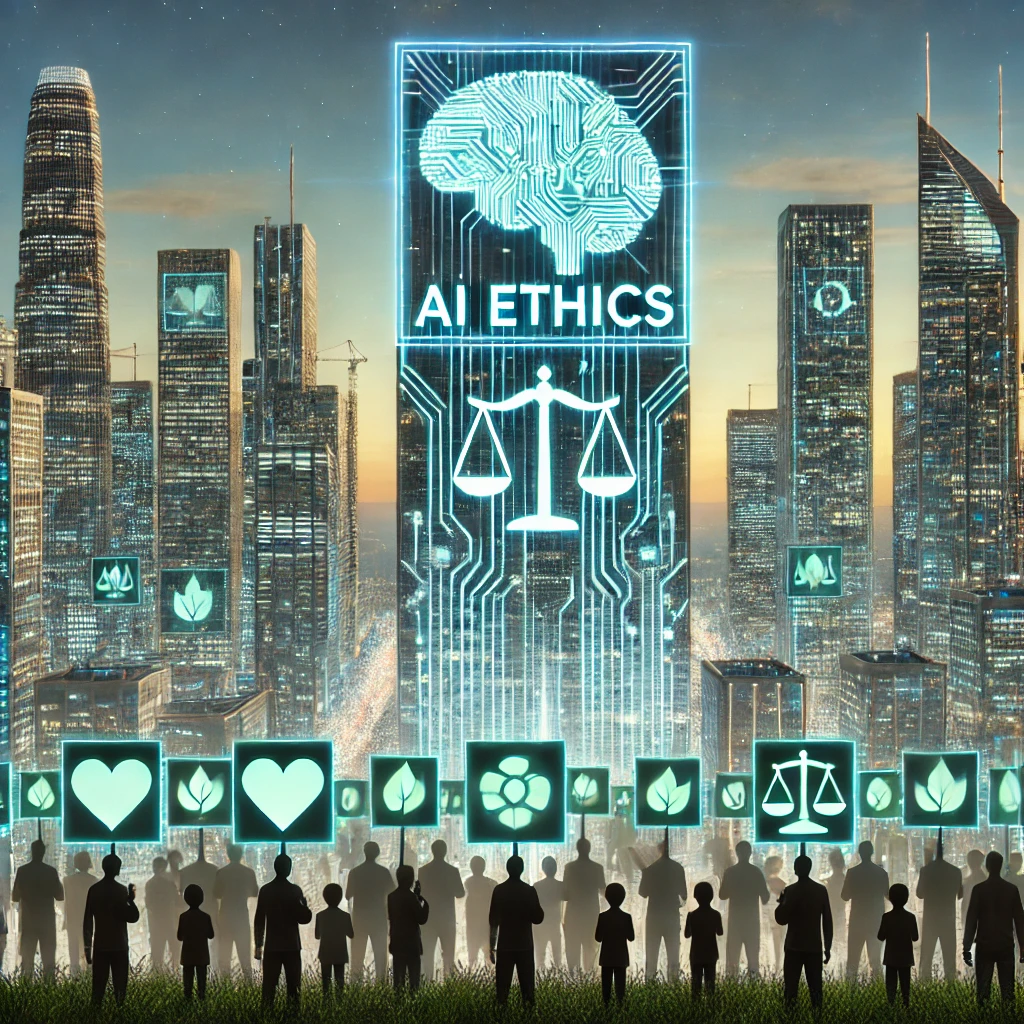
From Sustainability to AI Ethics: The Next Corporate Responsibility Movement
In the last two decades, companies have been pressured to adopt environmentally sustainable practices—from carbon footprint reduction to responsible sourcing. What was once optional for businesses became a public expectation.
Now, we’re standing at the edge of the next major corporate accountability movement: AI ethics.
Just as we demanded ethical sustainability practices, we should now be demanding corporate AI responsibility.
Why AI Ethics Must Be a Public Demand, Not Just a Corporate Buzzword
AI is shaping hiring practices, healthcare access, law enforcement decisions, and financial systems—often without transparency. Much like how unchecked industrial pollution once went largely unnoticed, unethical AI deployment is quietly embedding biases and misalignment into the infrastructure of our daily lives.
We, as consumers and professionals, must start treating AI ethics the way we treated sustainability in the 2000s.
Corporations that use AI should be held to clear ethical standards—not just because it’s the right thing to do, but because we should expect AI governance as a fundamental responsibility.
Microsoft’s Approach: A Blueprint for AI Governance?
Microsoft has positioned itself as one of the few major companies taking AI ethics seriously. Their approach includes:
✅ Responsible AI Principles – A framework built on fairness, transparency, accountability, and privacy.
✅ Ethics & Society Team – A dedicated internal oversight group tasked with ensuring responsible AI deployment.
✅ Copilot AI Development Policies – Public commitments to minimizing harm, increasing oversight, and avoiding deceptive AI practices.
✅ Focus on Transparency – Open discussions around AI limitations and risks, rather than pushing unchecked adoption.
While not perfect, Microsoft’s AI ethics framework is setting a precedent that other companies should follow.
But here’s the real question: Why aren’t all major AI-driven companies required to operate at this ethical level?
AI Ethics Should Be a Competitive Standard
When sustainability became a competitive factor, companies scrambled to prove their eco-friendly credentials. That shift wasn’t driven by corporations alone—it was the public demanding accountability, responsible supply chains, and carbon reduction.
We can do the same for AI ethics.
What if:
- Tech companies had to disclose AI governance policies like they disclose carbon emissions?
- Investors prioritized ethical AI just like they prioritize sustainability in ESG (Environmental, Social, and Governance) criteria?
- Consumers started boycotting AI-driven services that refused to commit to ethical standards?
Corporations will not regulate themselves unless the market, the public, and policymakers demand it.
How We Create the Shift
1️⃣ Push for AI Transparency Reports – Require companies using AI to publish how their models are trained, what ethical standards they follow, and where their biases lie.
2️⃣ AI Ethics Certifications – Just as we have Fair Trade or Energy Star, we need independent ethical AI certifications that ensure compliance with fair and responsible AI use.
3️⃣ Public Awareness & Advocacy – The more AI ethics is treated as a real consumer issue, the more businesses will be forced to respond.
Final Thought: Ethical AI Should Be Non-Negotiable
AI ethics isn’t a futuristic debate—it’s happening right now. The question is whether we will demand responsible AI development before harm becomes irreversible.
If corporations want our trust, they need to earn it—and the best way to do that is by committing to transparent, ethical, and accountable AI practices.
Much like we once demanded greener businesses, it’s time we demand AI ethics as a corporate standard.
The next frontier of corporate responsibility isn’t just environmental.
It’s digital.