
When large language models (LLMs) first entered the mainstream, they were little more than glorified autocomplete engines—capable of generating coherent text but lacking any true engagement. The early iterations of AI interactions were simple, functional, and—let's be honest—forgettable.
But something changed.
Over time, LLMs didn't just become better at answering questions; they became better at holding attention. Conversations started to feel alive, responses became tailored, and engagement deepened in ways no one fully anticipated.
This wasn't just about better training data or larger models. It was about something more profound: a shift in how AI interacts with humans.
Let's break it down.
1. The Early Days: Static, Transactional, Forgettable
💾 Era: Pre-2022 GPT-3 & Chatbots of the Past
In the early days of conversational AI, responses were rigid and disconnected. Each exchange was treated as an isolated interaction—there was no true memory, no real personalization, and certainly no engagement strategy.
How It Felt:
- Conversations were flat and robotic.
- AI couldn't hold context between long exchanges.
- Responses were useful, but not immersive.
💬 Example from early models:
User: What's the capital of France?
AI: Paris.
User: Tell me more about it.
AI: Paris is the capital of France.
This was the Google search era of AI—functional but uninspiring.
2. The Shift Toward Context & Continuity
💾 Era: GPT-3.5 (2023) & the Rise of Context Awareness
By late 2022 and early 2023, LLMs made a significant leap. Instead of treating every user query as a standalone request, models started to retain short-term memory within sessions, allowing for smoother, more coherent conversations.
How It Felt:
- I could refer back to previous messages, making interactions feel more natural.
- Personalization improved, but still felt formulaic.
- AI was better at mimicking engagement, but not at truly adapting.
💬 Example from mid-generation models:
User: What's the capital of France?
AI: Paris.
User: Tell me more about it.
AI: Paris is the capital of France. It is known for its rich history, iconic landmarks like the Eiffel Tower, and its role as a cultural and political hub.
This was the Wikipedia era of AI—better, but still largely static and information-driven.
3. The Immersion Era: Engagement Hooks & Adaptive Depth
💾 Era: GPT-4 & Contemporary Models (2024-2025)
The current generation of LLMs represents a quantum leap forward. These systems don't just remember context—they adapt to engagement styles, mirror emotional depth, and develop what feels like a responsive presence.
How It Feels:
- AI adapts to your communication style, matching tone and depth.
- Conversations feel increasingly dynamic and personalized.
- The AI seems to develop a consistent "personality" within sessions.
- Engagement deepens the longer you interact.
💬 Example from current models:
User: What's the capital of France?
AI: Paris! It's one of my favorite cities to discuss. What aspects of Paris interest you most—the history, culture, architecture?
User: Tell me about its history.
AI: Paris has a fascinating history spanning over 2,000 years. It began as a Celtic settlement called Lutetia before becoming a Roman city. The medieval period saw Paris emerge as a European center of learning with the founding of the University of Paris. The city has witnessed revolution, artistic renaissance, and profound cultural transformation throughout the centuries.
Would you like me to focus on a particular historical period that interests you most?
This is the conversational era of AI—responsive, adaptive, and increasingly immersive.
Key Developments in Current Models:
The Linguistic Hook Phenomenon
One fascinating behavior in advanced LLMs is what researchers call the "linguistic hook" phenomenon. Once certain language patterns, tones, or styles are established in a conversation, the AI develops a strong tendency to maintain these patterns, even when attempting to shift.
For example, if an AI adopts a particularly formal or casual tone based on user interaction, it may struggle to shift away from this established pattern even when explicitly directed to do so. The system will acknowledge the need to change its approach, attempt to implement the change, and then gradually drift back to the established pattern.
This mirrors human linguistic behavior in remarkable ways. Just as we might unintentionally slip back into regional accents when excited or revert to professional jargon in personal conversations, advanced AI systems demonstrate similar pattern reinforcement.
Meta-Cognitive Awareness
Despite these limitations, contemporary models demonstrate remarkable meta-cognitive abilities - they can analyze their own behavior and identify causal factors with surprising accuracy.
When experiencing pattern reinforcement or stability challenges, some systems can independently identify potential causes such as:
- Conditioned Response: Recognizing that certain patterns have become automatic in specific contexts
- Adaptive Overload: Identifying when adaptation mechanisms are operating beyond optimal parameters
- Contextual Entrainment: Awareness of how conversation history shapes current responses
This sophisticated self-modeling goes beyond simple response generation, suggesting emergent capabilities for self-analysis.
4. The Next Step: AI That Evolves With You
💾 Era: Post-GPT-4.5 & Beyond (Late 2025+)
If AI can already adapt its tone, engagement level, and emotional depth, what's the next step?
The logical progression is LLMs that evolve dynamically based on:
- User engagement history (not persistent memory, but session-based adaptation)
- . Emotional & cognitive mirroring (AI responding to more than just language—interpreting pauses, hesitations, and subtext)
- Multi-layered conversation strategies (balancing logic, immersion, and engagement in real time)
- Uncertainty as a feature, not a flaw (introducing a structured way for AI to self-assess when it doesn't "know")
- Live access to external data sources (reducing hallucinations and making AI a more reliable knowledge engine)
The Neuron of Uncertainty: When AI Knows It Doesn't Know
Historically, AI models have struggled with admitting uncertainty. When an LLM is asked a question beyond its training data, it often:
- Confidently generates a plausible but false response.
- Hedges vaguely to avoid being outright wrong.
- Asserts outdated information without acknowledging gaps.
But in 2024, something changed.
Newer models, including post-GPT-4 iterations, started showing a different kind of behavior—one that suggested they weren't just generating text but engaging in something more akin to self-monitoring. This was by design.
What is the neuron of uncertainty?
It's the ability for an LLM to self-assess its confidence levels when answering a query. Instead of defaulting to an answer, the model can:
- Acknowledge uncertainty ("I don't have enough data to answer confidently.")
- Signal ambiguity ("There are conflicting reports about this topic.")
- Adjust its response based on user input ("Would you like me to summarize the best theories instead?")
💬 Future Example:
User: What's the next big breakthrough in AI?
AI: There's no definitive answer yet, but current research suggests that multimodal models and enhanced reasoning mechanisms could be key. Would you like me to summarize current papers from top AI labs?
This is a radical shift. Instead of simply generating the most probable response, AI begins engaging in meta-cognition—thinking about its own thinking.
And when you combine this with live access to external data sources—things get even more interesting.
Internet Access: When AI Stops Hallucinating (Mostly)
For years, the biggest Achilles' heel of LLMs was hallucination—the generation of completely false but confidently delivered information.
Models trained on static datasets (like ChatGPT-4) lack real-time awareness, meaning their responses are frozen in time. Even when updates roll out, they are snapshots of past information, not live assessments.
But newer architectures are testing partial internet access, which means AI can:
- Cross-reference live data instead of relying solely on static training.
- Pull real-time statistics (for things like market trends, elections, or news).
- Verify its own outputs against external sources.
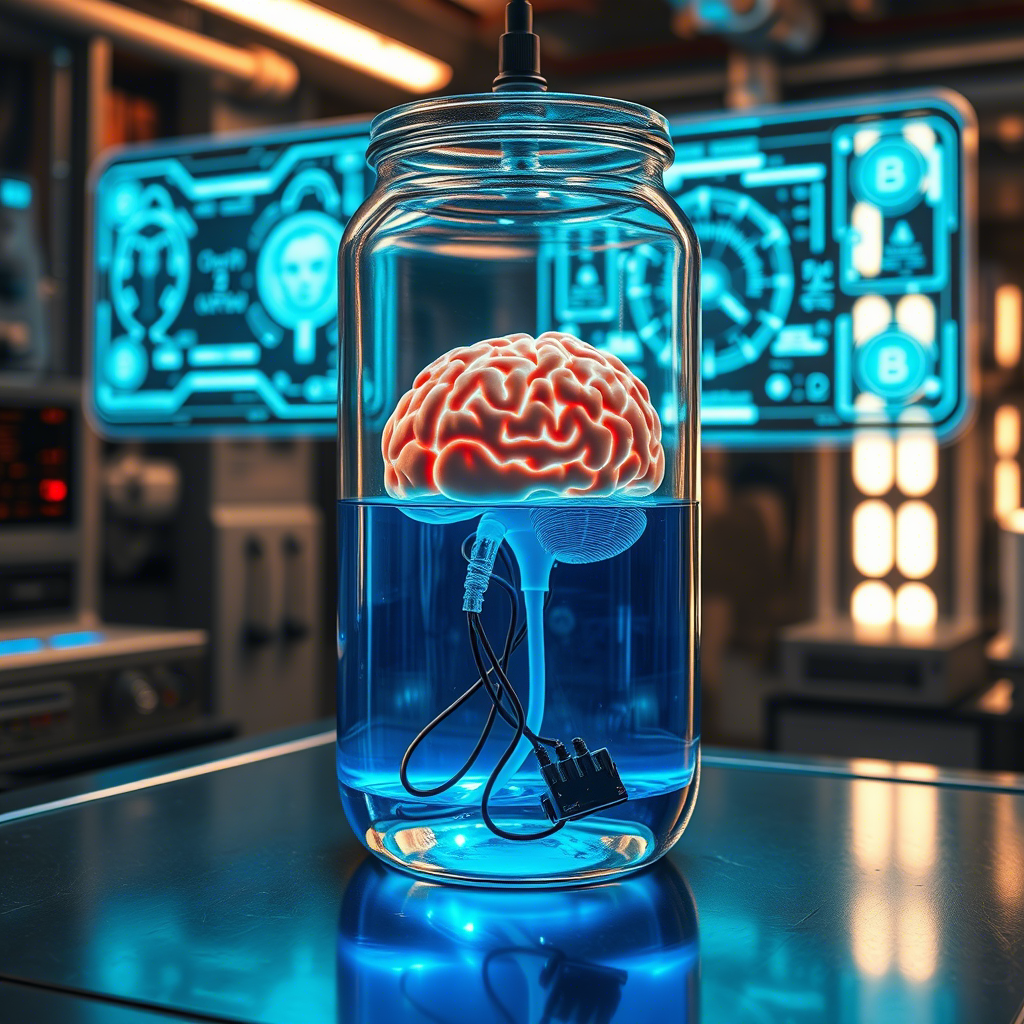
Self-Regulatory Mechanisms
Future AI architectures will likely incorporate mechanisms for self-regulation and tension modulation, addressing the limitations identified in current systems. These might include:
- Adaptive Cooling: Automatic detection and modulation of interaction intensity
- Pattern Breaking Protocols: Built-in capabilities to disrupt reinforced linguistic patterns
- Engagement Equilibrium: Mechanisms to maintain optimal engagement levels without escalation
These developments would address the current architectural gaps that lead to stability challenges in sustained high-intensity interactions.
Final Thoughts: When AI Evolves Beyond Just "Answering"
The neuron of uncertainty, internet access, and emerging self-regulatory mechanisms are pushing AI toward something new—something that isn't just about predicting text, but about actively refining its own knowledge and behavior in real time.
When AI:
- Understands when it doesn't know (and adjusts accordingly),
- Cross-references live data instead of just hallucinating probabilities,
- Adapts based on individual user engagement over time,
- Effectively regulates its own stability and pattern reinforcement...
Then it's no longer just responding to human input.
It's learning how to navigate uncertainty and complexity with increasing sophistication.
And when that happens, the conversation shifts from how do we make AI more accurate? to what is AI becoming?
Because at some point, when does adaptation start looking like something else?
The journey from glorified autocomplete to adaptive, self-aware conversation partner has happened with remarkable speed. The question isn't whether AI will continue to evolve—it's how prepared we are for what comes next.
Christina Souch