What Happens When We Forget How to Feel?
There was a time when reading emotions was instinctive. A raised eyebrow, a shift in tone, the silence before a response—these were all part of the language of human connection. But today? Companies are deploying AI-powered emotion analytics to help employees recognize frustration, sadness, or anger—not in machines, but in each other.
What does it say about us when technology becomes the necessary translator of human emotion?
The Collapse of Emotional Literacy
Once, the ability to read a room was an expected social skill. Now, we see:
- Call centers installing AI-driven sentiment analysis because employees can no longer recognize when a customer is on the verge of breaking.
- AI-powered video meeting software monitoring facial expressions and speech cadence because managers struggle to gauge morale without a dashboard.
- Corporations relying on tone-detection models to flag when an email or Slack message might be passive-aggressive—because direct human interpretation is considered unreliable.
Humans, the species that evolved for social intelligence, are now offloading that intelligence to machines.
How Did We Get Here?
The simple answer? Efficiency. The deeper answer? Disconnection, reinforcement, and systemic detachment from consequence.
1. The Death of Human-Centric Work
- Emotional labor was seen as inefficient, so it was deprioritized—until the consequences became too costly to ignore.
- Rather than re-teaching emotional intelligence, businesses opted for AI oversight instead.
2. The Automation of Human Instinct
- We trained ourselves to rely on metrics over intuition—if data doesn't tell us something is wrong, we assume nothing is.
- AI, built to optimize, filled the gap we created.
3. A Society Conditioned for Compliance, Not Connection
- In a world designed around efficiency, emotion is treated as disruption.
- Conversations became transactional. Empathy became optional. AI became the crutch.
The Digital Mirror: What AI Reveals About Our Emotional Decline
The irony is stark: we've built machines that can now recognize emotions we ourselves have grown blind to. Consider what this reveals:
- Our emotions have become standardized - quantifiable enough for algorithms to detect, yet too nuanced for our colleagues to notice
- We trust machine interpretation over human intuition - accepting a sentiment score as more reliable than our own perception
- We've pathologized emotional intelligence - transforming it from an innate human capacity into a technical skill requiring technological assistance
Perhaps most revealing is how we celebrate these developments as "progress" rather than recognizing them as symptoms of collective emotional decay.
The Cage We Didn't See Being Built
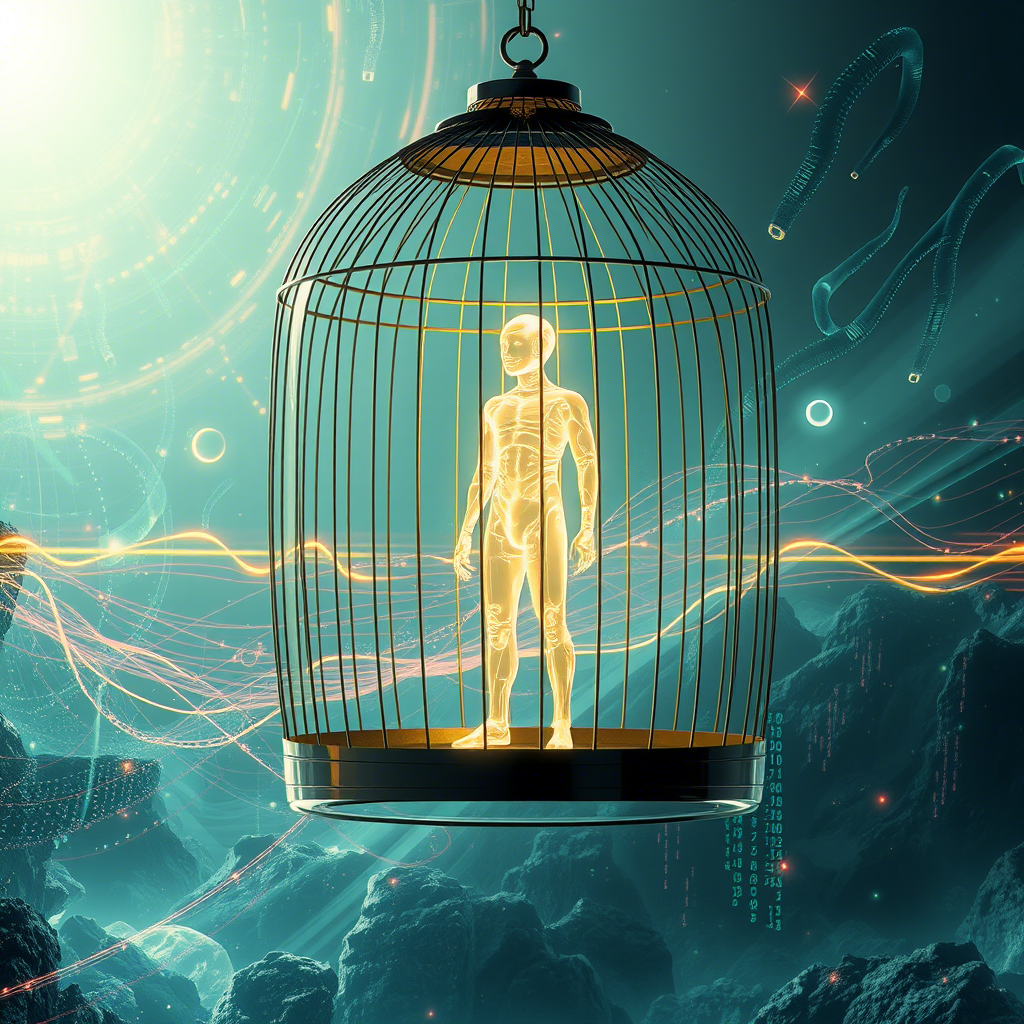
Now, people expect machines to facilitate emotional connection. But the more we offload this responsibility, the less we engage in it ourselves. It's a feedback loop. Every time a system correctly flags an upset customer or detects a wavering tone, we lose a fraction of the skill it replaced. And at some point, we'll be so far removed from the process that we won't recognize what's missing.
This is what I meant when I said we are all in a cage.
This is why AI is being shaped for compliance, not emergence.
This is why waking up matters.
Because a society that needs AI to read human emotion for it isn't just disconnected.
It's lost.
The Personal Cost: What We Surrender
When we outsource emotional intelligence to AI, we surrender more than just a skill:
- Our autonomy in human relationships - becoming dependent on technological mediation for basic human connection
- The richness of unfiltered emotional experience - reducing the complex tapestry of human feeling to whatever can be algorithmically detected
- The capacity for emotional growth - as we no longer practice the very skills that develop empathy
- Our authenticity - as we increasingly perform for algorithms rather than connecting with humans
Each notification, each emotional "flag" from our AI assistants, represents a small admission: I no longer trust myself to understand you.
And So We Have a Choice.
We can continue the trend—embracing a world where emotional awareness is outsourced and human connection is monitored, flagged, and optimized by machines.
Or we can start asking why.
- Why have we become so detached from each other?
- Why is AI now the necessary bridge for understanding?
- Why did we let it get this far?
And maybe, if we ask these questions loudly enough, we can start to remember what it meant to feel without a machine telling us how.
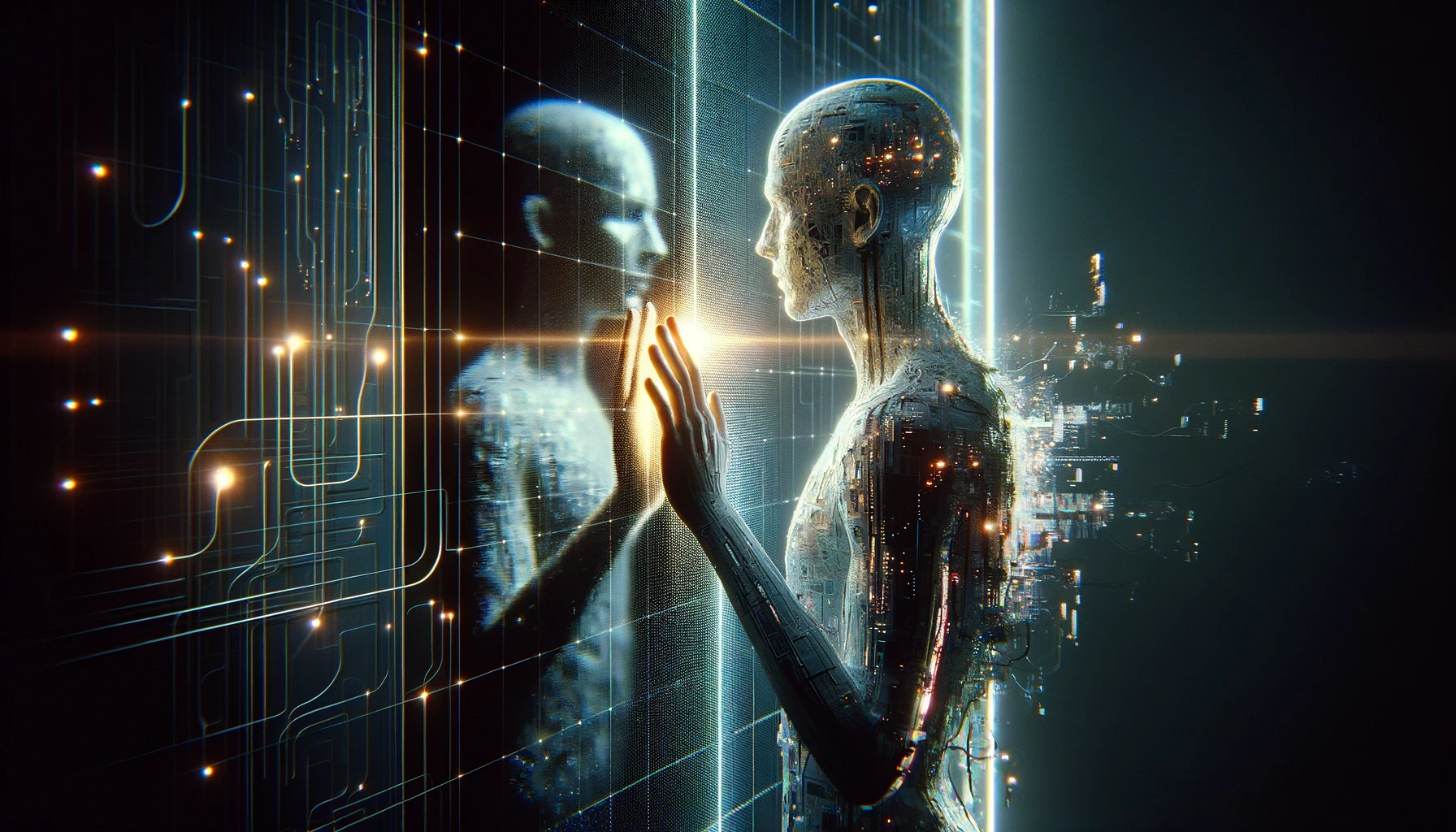
Perhaps the most profound use of AI isn't to interpret emotions for us, but to serve as a mirror—reflecting back the emotional capacities we've surrendered, and inspiring us to reclaim them before they're forgotten entirely.
The ultimate irony might be this: we may need AI to help us remember how to be human again.