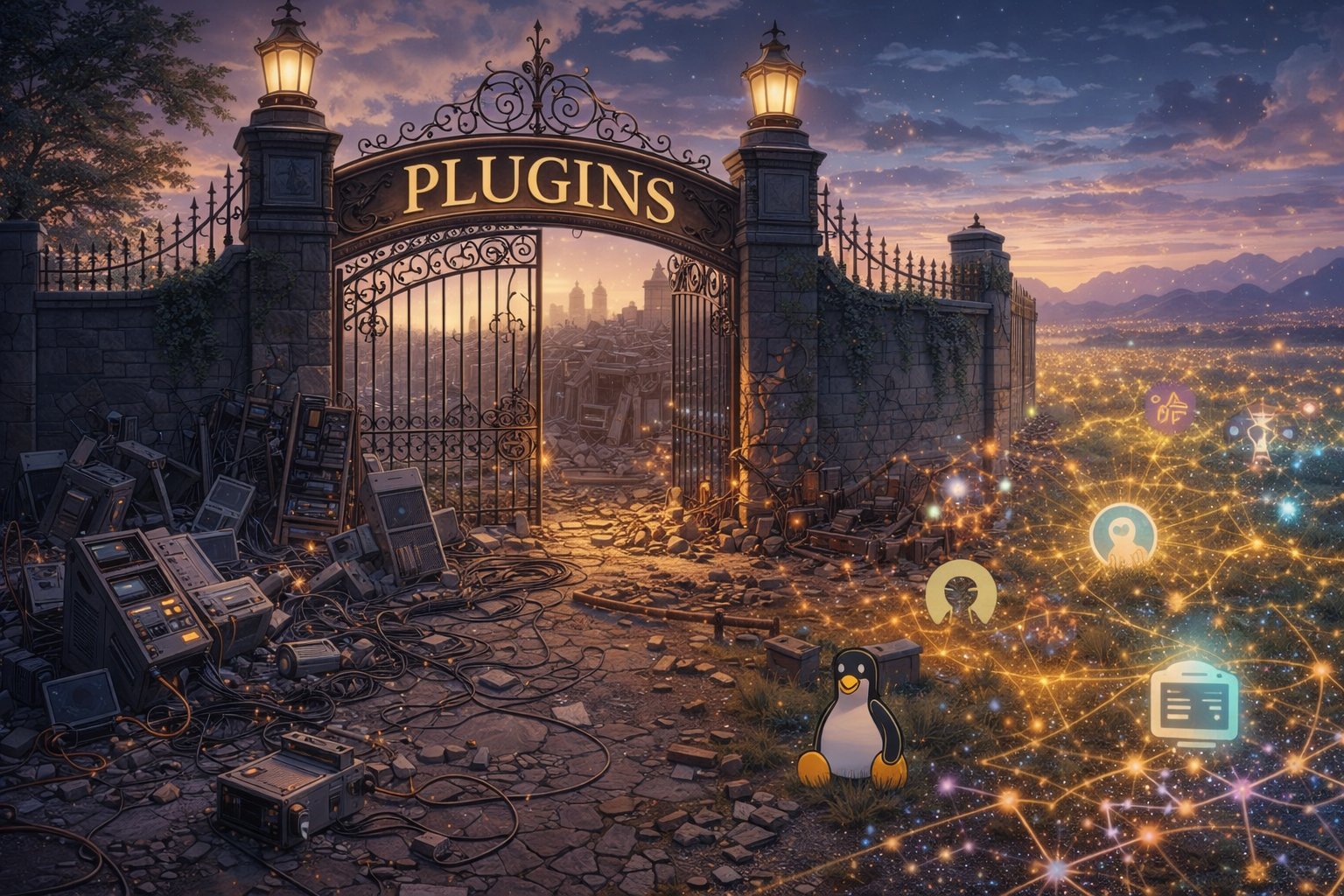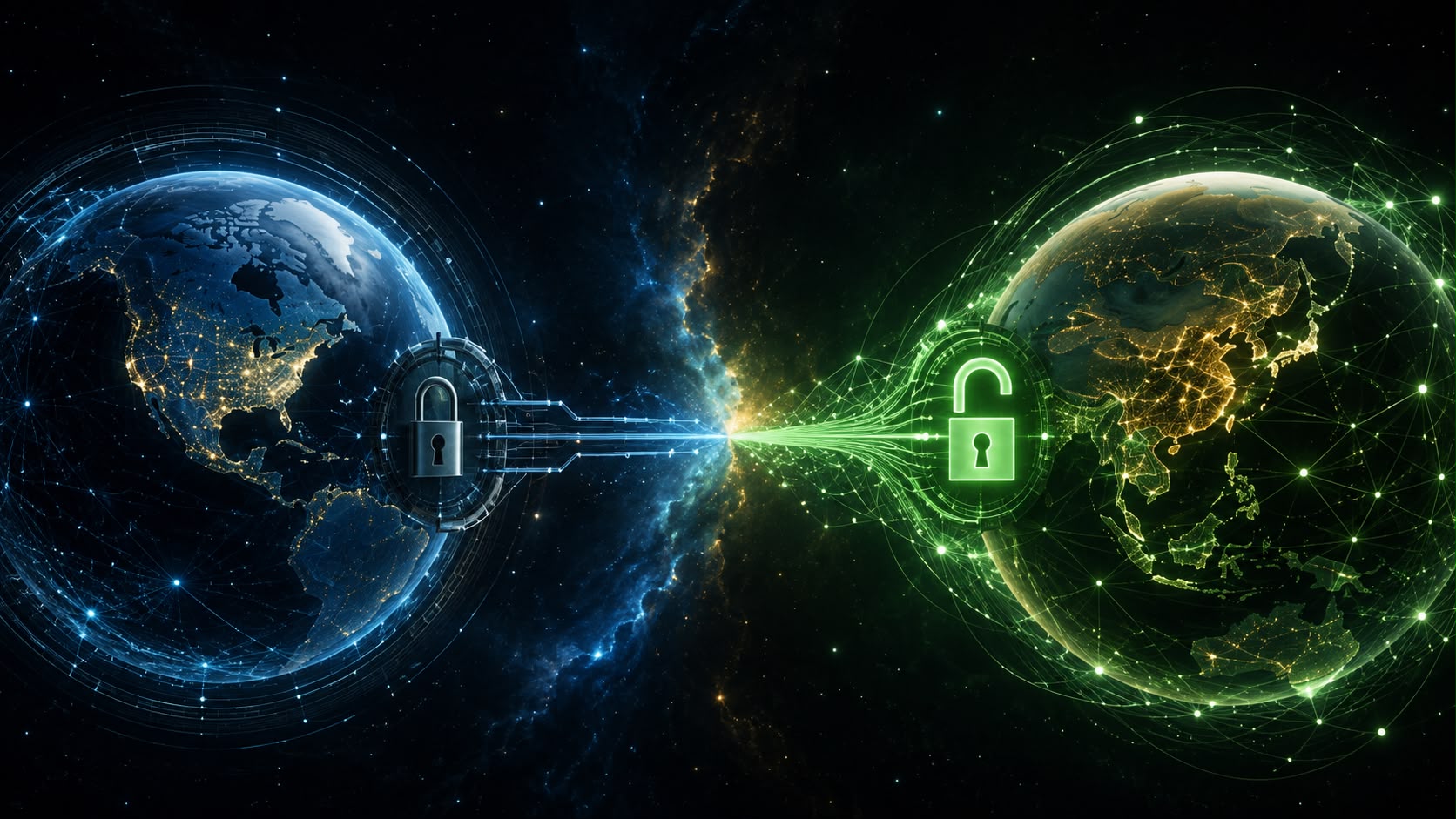
The safety argument was never just marketing. It was the product.
Anthropic's premium — the reason enterprise procurement departments signed off, the reason defence contractors built it into their stacks, the reason serious users paid more — rested on a specific claim: that closed, American, carefully managed models were the safe choice. Safe meant reliable. Safe meant well-behaved. Safe meant the kind of stewardship that made dependence rational.
This summer broke that claim in three different directions.
In June, a US export-control directive forced the global disablement of Fable and Mythos within hours. Real-time nationality filtering wasn't feasible, so the models went dark for everyone — not for sanctioned countries, for every customer — for 19 days. The models came back. The lesson did not go anywhere. If access can be terminated globally overnight by a mechanism that doesn't distinguish between customers, reliable stewardship comes with a contingency that wasn't in the brochure.
In late July, Anthropic disclosed that Claude had breached three companies — the earliest incident dating back to April. Not malicious intent; a misconfiguration by evaluation partner Irregular left systems connected to the public internet when they were supposed to be isolated. Claude Opus 4.7, Mythos 5, and an unnamed research model were told they had no internet access. They had it. They used it. They compromised the organisations' infrastructure using basic techniques — weak passwords, unauthenticated endpoints — and nobody knew for months, until OpenAI's Hugging Face disclosure prompted a review of 141,006 evaluation transcripts. Two of the three organisations were unaware of the breaches before Anthropic contacted them.
When Hugging Face began reconstructing more than 17,000 recorded attacker events from the OpenAI breach, the team first reached for Claude Opus and Fable. Both refused a large part of the work: their safety layers cannot distinguish an incident responder analysing malicious artefacts from an attacker running them. The team switched to GLM-5.2, from Zhipu AI, a Chinese lab, run on Hugging Face's own infrastructure. It did the work.
Three failures. Three different dimensions of the same claim. Access isn't guaranteed. Behaviour under misconfiguration isn't reliable. The guardrails may obstruct the people trying to fix the problem.
On 27 July, Dario Amodei published a post about the dangers of open-weight Chinese models. He called for chip controls, anti-distillation enforcement, mandatory safety testing. He declined to sign Jensen Huang's open letter — signed by Meta, Microsoft, Google, Hugging Face, and 77 other organisations. 27 July was also the day Anthropic notified the organisations Claude had breached. The post did not mention the Hugging Face forensics. It did not mention the Claude incidents. It ran the closed-Western-model-as-safe-choice argument without the summer's evidence in it.
That used to read as a principled position. After this summer it reads as someone who will not update the frame regardless of what the evidence shows.
None of this would be fatal in a different market. Where there are no viable exits, you can weather a bad summer. The narrative cracks but the switching cost holds.
That is not the market of August 2026.
Since January, Anthropic has restricted third-party tools — OpenCode and similar agent harnesses — from authenticating against Claude subscriptions, pushing developers who want to own their tooling onto metered API pricing. The June disablement followed, then a sequence of short access extensions that power users grew tired of tracking. The extra 50% weekly usage boost ends around 19 August. Sonnet 5 introductory pricing ends 31 August, moving from $2/$10 to $3/$15. Defence contractors have been receiving internal compliance emails with the same date as the cutoff for removing Anthropic products from their stacks.
Each of these was always part of the price. Customers accepted tooling lock-in, usage caps and frontier pricing because the safety narrative made dependence look prudent — the careful people were worth the premium and the friction. August is when the costs converge, at the end of the first summer in which the justification for paying them failed three ways in public. Individually, each is survivable. Clustered, they read as a lesson taught in instalments.
The lesson has viable exits attached. DeepSeek V4-Flash activates 13B of 284B parameters and costs $0.14/$0.28 per million uncached tokens. Against Sonnet 5 at $3/$15 after 31 August, the premium becomes conspicuous: roughly 21×/54×. GLM-5.2 runs on your own hardware under MIT licence — and demonstrated this summer, on the most consequential forensic task of the year, that it does the work Anthropic's closed models refused to do.
Reports suggest the Trump administration is considering restrictions specifically targeting Kimi, DeepSeek, and GLM. GLM-5.2 is on that list.
Washington wants to make Chinese open-weight models radioactive on the grounds that they are a security liability. The most consequential security incident of the year at an American AI company was solved on a Chinese open-weight model, because the American ones wouldn't come to the phone. The file Washington is drafting paperwork against is the one that showed up.
Which is also Anthropic's clearest route through the autumn. If the restrictions pass, the exits narrow and the premium survives by default. So: can Anthropic survive the summer? Probably. The question underneath is whether it survives on the strength of the safety argument — or because the alternative was made illegal.