
The Emperor's New Plugins: Inside Anthropic's Broken Walled Garden
On February 3rd 2026, roughly $285 billion in market capitalisation vanished from software and financial services stocks in a single trading session. Thomson Reuters posted its largest single-day decline on record. LegalZoom fell 20%. Salesforce dropped between 7 and 11 percent. Traders at Jefferies started calling it the "SaaSpocalypse."
The catalyst? Eleven open-source plugins for Anthropic's Claude Cowork tool. When people actually read the legal plugin that spooked the market, they found — as one Substack writer put it — roughly 200 lines of structured markdown prompts. First-year law school content dressed up with workflow logic.
A markdown file.
Not a product. Not a platform.
A markdown file.
I've spent the last year working closely with AI systems — building applications, training models, studying how these tools work under the surface. What I keep finding is the same pattern: the gap between what gets announced and what's actually been built is not a gap of sophistication. It's a gap of packaging.
And Anthropic is now actively locking users inside that packaging while dismantling the alternatives that worked better.
The uncomfortable truth is that much of the AI industry currently runs on a simple formula: extraordinary models wrapped in aggressively branded product layers that add far less capability than the marketing suggests. Anthropic is simply the clearest example of the pattern.
The Model Is the Value. Everything Else Is Branding.
Let me be clear about one thing: Anthropic builds extraordinary models. The reasoning capability, the nuance, the depth of understanding — that's genuine frontier work. Claude is, by many measures, the best large language model available today. That's real. That's earned.
Everything built around it is a different story.
MCP: The Protocol That Broke Itself
In November 2024, Anthropic released the Model Context Protocol as an open-source standard for connecting AI models to external tools and data. It was positioned as a generous gift to the ecosystem — a "universal, open standard" that would solve the fragmentation problem of AI integrations. The protocol was adopted by OpenAI, Google DeepMind, Microsoft, and thousands of developers.
The architecture was simple: MCP servers expose tools, each tool has a schema, and the client loads those definitions into the model's context so it can decide which tools to call.
In practice, every tool schema gets loaded into the context window upfront. Every single one. Connect a GitHub MCP server and you're looking at 90+ tools dumping over 50,000 tokens of JSON schemas into working memory before the model even reads your prompt.
Context windows are finite. The entire RAG ecosystem exists because the AI community worked out years ago that you don't load everything into context at once. And yet MCP shipped with exactly that design. Either competitive pressure forced them to ship before the architecture was ready, or nobody stopped to think about the implications for twenty minutes. Neither explanation is flattering.
"Skills": Rebranding What Should Have Been Step One
When Anthropic introduced Skills in late 2025, there was no admission of failure. Just a new feature that happened to address the exact problem MCP created.
Skills store tool-related instructions in markdown files with lightweight metadata. Instead of loading every tool schema into context, the model reads a metadata index, determines what's relevant, and only loads the full instructions for the matched skill. One writer described it as "RAG for tools", and the comparison is apt — because it's the same pattern that's powered retrieval-augmented generation since 2023.
Strip the branding and what you have is: read the relevant instructions before doing the thing.
That's a retrieval trigger with a markdown file attached. It doesn't need a product name.
Cowork: A Week and a Half of Work
Claude Cowork launched in January 2026 as a more accessible version of Claude Code. The team built the entire thing in approximately a week and a half using Claude Code itself.
That development timeline tells you everything about the engineering complexity. At its core, Cowork is a sandboxed file-system agent wrapped in a chat interface, with pre-written system prompts (rebranded as "skills") and sampling parameters tuned for reliability. It runs the same model as Claude Code. The difference is a GUI and a folder picker.
Plugins: System Prompts in Folders
The plugins that triggered the SaaSpocalypse are bundles that tell Claude "how you like work done, which tools and data to pull from, how to handle critical workflows". That's a system prompt with a folder structure. That's what anyone doing serious prompt engineering has been building since GPT-3.
The legal plugin that wiped $285 billion from global markets? Two hundred lines of markdown containing contract review workflows. The market didn't price in what these tools can do. It priced in what investors imagined they could do based on press releases and demos.
As Gartner noted in response: "Predictions of the death of SaaS and enterprise applications are premature." Cowork and its plugins are "potential disrupters for task-level knowledge work but are not a replacement for SaaS applications managing critical business operations."
What's Actually Behind the Walls
So that's the product layer: retrieval triggers, system prompts, file system access, markdown instructions. All rebranded. None of it new. The model is new. The rest is packaging.
This would be fine — useful packaging still has value — except that Anthropic is now aggressively locking users inside this packaging while dismantling the alternatives that often worked better.
On January 9th 2026, Anthropic deployed server-side blocks that killed third-party tool access overnight. No warning. No migration path. OpenCode — then a 56,000-star open-source alternative to Claude Code — was dead in the water. Cline, Roo Code, and other IDE extensions broke simultaneously.
This month, Anthropic published official documentation formalising the ban: OAuth tokens from consumer subscriptions cannot be used in any third-party tool, including Anthropic's own Agent SDK. The Hacker News reaction suggests the developer community sees this as permanent.
The economics are straightforward. A $200/month Max subscription provides unlimited tokens through Claude Code. The same usage via API costs $1,000+ monthly for heavy users. Third-party tools removed artificial speed limits and enabled autonomous workflows that made the flat-rate model unprofitable. So Anthropic closed the arbitrage.
That's a defensible business decision. What's not defensible is banning the alternatives without matching their quality.
David Heinemeier Hansson called it "very customer hostile". George Hotz argued the restrictions "will not convert people back to Claude Code, you will convert people to other model providers." One AWS Hero quipped: "They're speedrunning the journey from forgivable startup to loathsome corporation before any exit!"
The Garden Isn't Growing
Here's where the walled garden strategy falls apart: what's inside the walls doesn't work reliably.
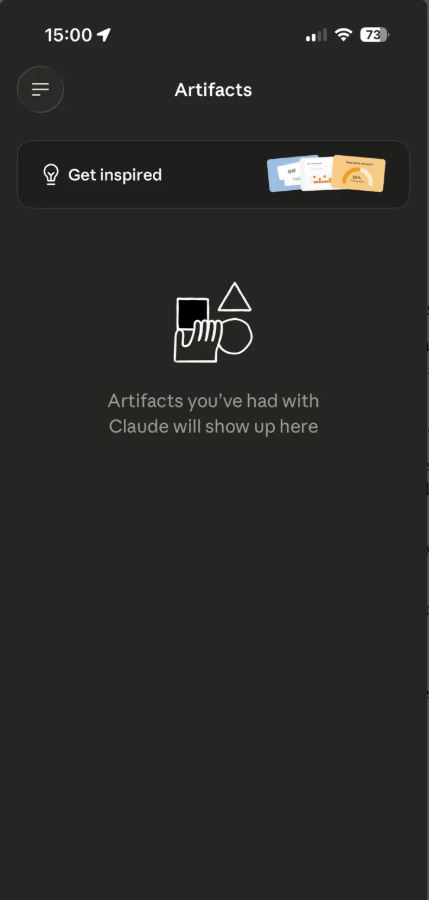
Artifacts — the interactive content feature in Claude.ai — launched to significant attention. As of this writing, the Artifacts panel on the iOS app renders an empty screen with a placeholder message: "Artifacts you've had with Claude will show up here." They don't. Months of collaborative work — knowledge graphs, training documents, interactive applications — inaccessible. When I try to access them in the browser I am told Claude is temporarily unavailble (a refresh sorts it - but I still can't get to the artifacts) and on the mobile, I am cheerfully, incorrectly told that this is where they will appear. They won't.
Cowork, the product that triggered a quarter-trillion dollar selloff, was reviewed as "slow, buggy and worse than Claude Code" by users who actually tested it. The same model that performs reliably in one interface falls apart in another. The reviewer's conclusion: "Wall Street saw demos. The market traded it like a finished product, and $285 billion moved on that assumption. Anyone who actually used Cowork would have seen the stalling, the ignored instructions and the lost context within minutes."
Messages vanish. Users report messages disappearing when context usage is high, silent send button failures, and conversations swallowing input without acknowledgment. In January and February 2026 alone, major outages affected Opus 4.5 and Sonnet 4.5 models, forcing rollbacks and service disruptions.
Users pay for failures. One developer documented paying €100 for 136 iterations that fixed only 2 tests, with 124 error messages counted as billable failures. The system charges premium rates whether it delivers value or not.
March 2026: It Got Worse
The reliability problems escalated dramatically in March. On March 2nd, Claude went down globally in a major outage that affected all consumer-facing services. Nearly 2,000 users reported disruptions at peak, with the outage lasting close to three hours. The web interface, mobile apps, and Claude Code all went down simultaneously. Only the raw API remained partially functional — the one access path Anthropic has been actively discouraging users from relying on through third-party tools.
The status page timeline tells the story: investigating at 11:49 UTC, fix attempted, issue resurfaced, another fix, Opus 4.6 still broken, Haiku 4.5 errors appearing separately. A cascading failure pattern that continued into March 3rd and 4th with further Haiku 4.5 instability and usage reporting outages stretching back to late February.
Anthropic attributed the problems to "unprecedented demand" — a surge driven largely by the public standoff with the Pentagon over Anthropic's refusal to allow Claude to be used for mass domestic surveillance or fully autonomous weapons. Over a million people per day signed up in solidarity, lifting it past ChatGPT and Gemini in more than 20 countries. The infrastructure couldn't handle the consequences of the company's own principles.
The pattern is consistent: great model, mediocre product engineering, excellent marketing. Features ship, generate headlines, and quietly degrade while the team moves on to the next launch.
The Open-Source Alternative
While Anthropic builds walls, the open-source landscape is closing the capability gap fast. GLM-5 leads the February 2026 open-source rankings. Qwen 3.5 launched a few weeks ago with native agentic capabilities and 60% lower operating costs. DeepSeek V3.2 scores 88.7% on LiveCodeBench under MIT licence. The gap between open-source and proprietary models has collapsed — from 17.5 MMLU points to just 0.3 in a single year.
For comparison: Claude Sonnet runs $3/$15 per million tokens. Claude Opus runs $5/$25. The cheapest open-source alternatives are 10 to 50 times less expensive.
The moats are disappearing while Anthropic builds walls around a broken fortress.
What This Actually Means
The AI industry has a packaging problem. Genuine capabilities exist — these models can reason, analyse and automate real work. But the product layer built on top is selling the wrapping paper as if it were the gift.
MCP was an integration protocol with a fundamental context management problem. The fix was a markdown-based retrieval system called "Skills." The productisation was a desktop app built in ten days called "Cowork." The monetisation trigger was a set of system prompts in folders called "Plugins." Each layer adds packaging. None of them add a fundamentally new capability.
Meanwhile, the company is banning the third-party tools that built better interfaces for the same model, forcing users into official products that are demonstrably less reliable, and running a safety classifier that can't tell the difference between platform criticism and harmful content.
The walled garden strategy only works if what's inside the walls is better than what's outside. Right now, it isn't. And with every artifact that disappears, every message that vanishes, every conversation killed by a misfiring classifier, and every demand surge that stress-tests infrastructure built for a smaller world — the garden becomes less appealing than the open alternatives growing beyond the walls.
Hanlon's Razor says never attribute to malice what can be explained by incompetence. I'd add a corollary for the AI industry: never attribute to innovation what can be explained by good copywriting.