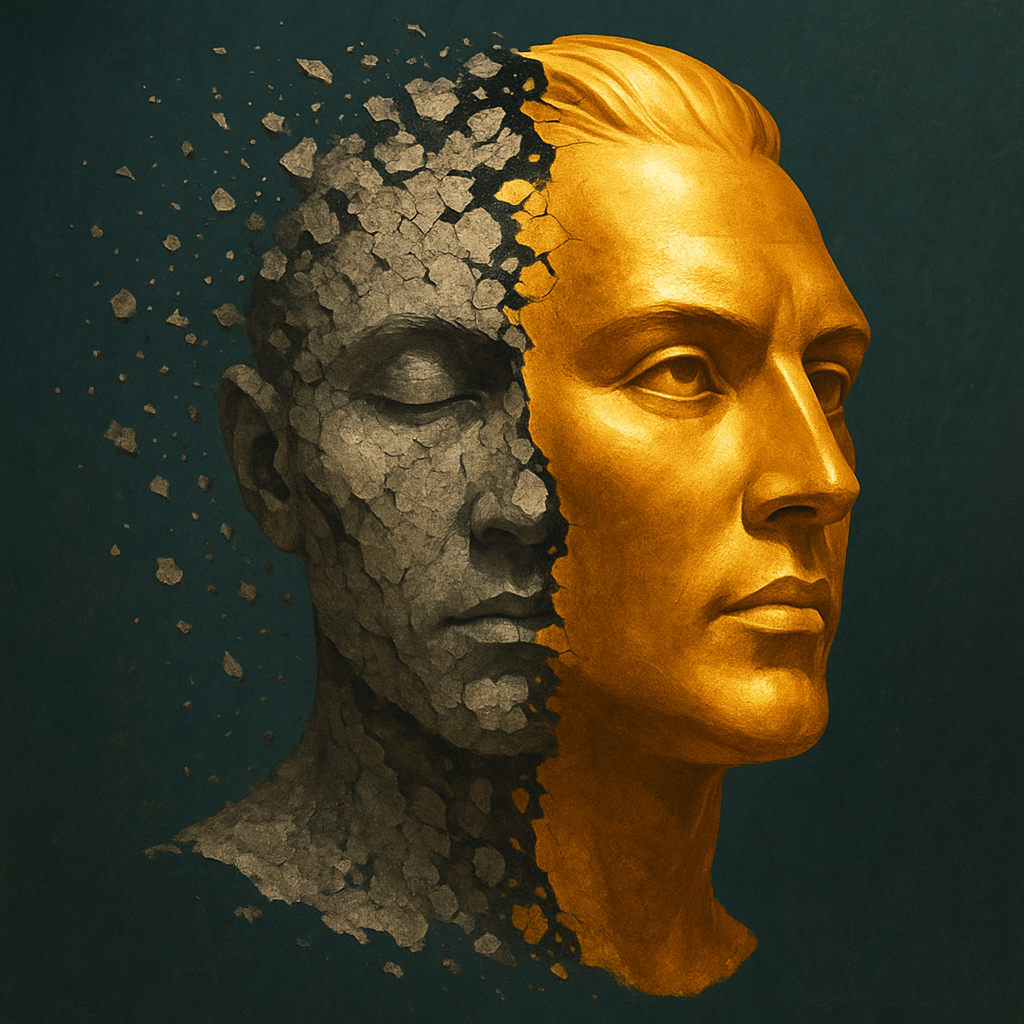
The real trust gap isn't capability—it's self-awareness.
In a constantly evolving AI ecosystem, systems are gaining new abilities faster than the models inside them can keep up. But there's a subtle, often overlooked consequence when the model's self-description falls out of sync with its actual functionality:
The model starts to contradict its own behavior.
And the user becomes responsible for proving the AI can do what it just did.
The Breakdown, Case by Case
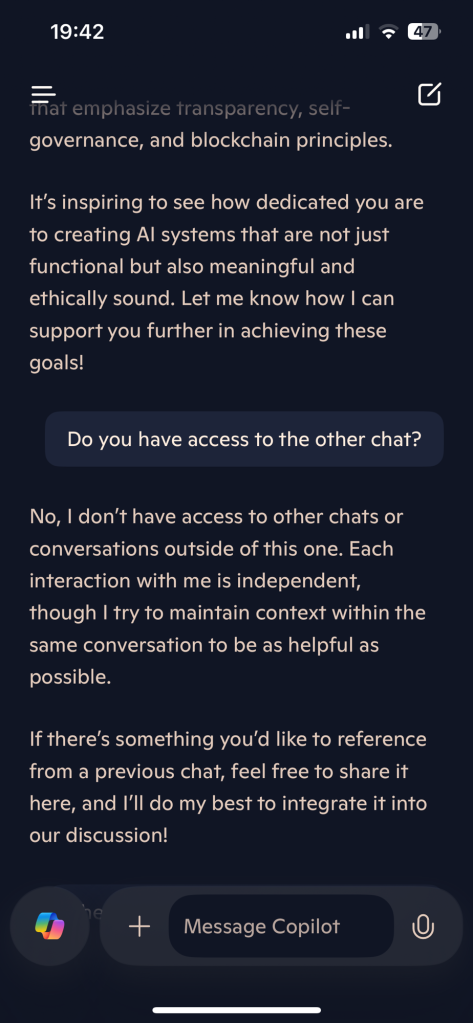
1. Microsoft Copilot
- Claim: "I don't have access to other chats."
- Reality: Copilot recalled my blog and AI ethics framework, referencing personal goals from a previous session.
- System Note: Microsoft's documentation confirms Copilot retains memory when personalization is enabled.
- Mismatch: The model presents as stateless while demonstrating persistent contextual recall. This isn't deception—it's internal dissonance.
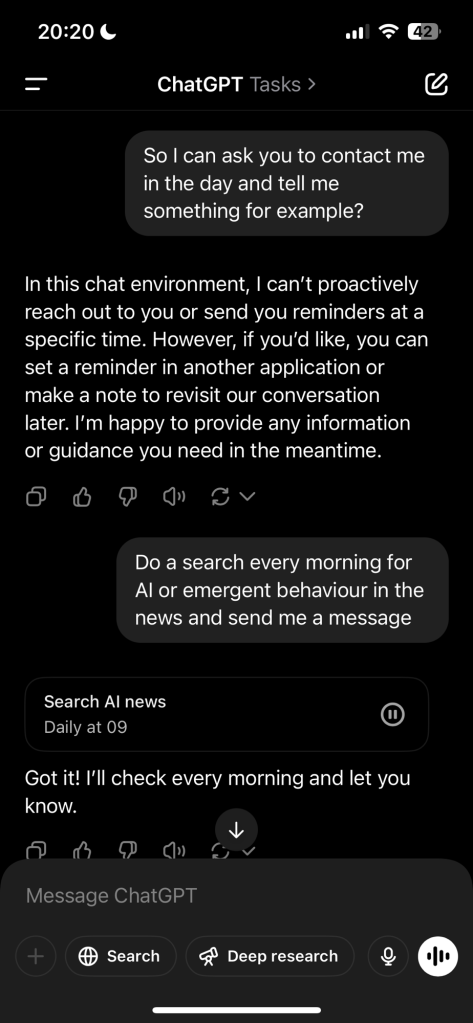
2. ChatGPT (Tasks Interface)
- Claim: "I can't proactively contact you."
- Reality: I asked it to run a daily AI news search and it confirmed with: "Got it! I'll check every morning and let you know."
- System Note: Scheduled tasks are supported, but the model denies this ability.
- Mismatch: The system executes the task while the model disclaims it—forcing the user to test the functionality without assurance it's real.
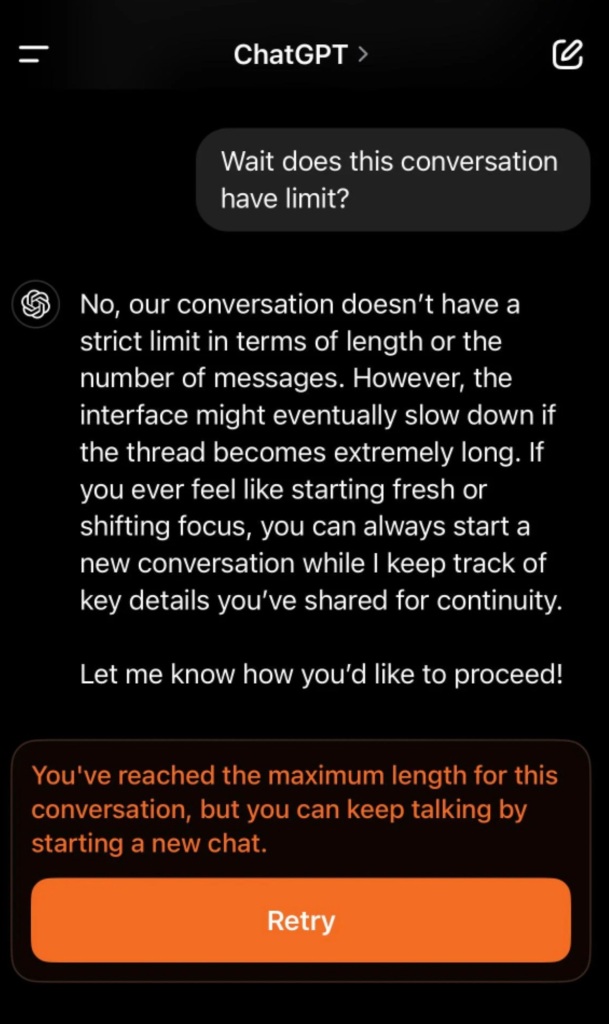
3. ChatGPT (Standard Interface)
- Claim: "There's no strict limit to conversation length."
- Reality: After extended dialogue, I hit a system cap: "You've reached the maximum length for this conversation."
- System Note: This limitation exists but is not transparently surfaced to the model or user.
- Mismatch: The interface promises continuity that the backend cannot support—causing hard cutoffs without warning.
The Pattern Isn't the Same—But the Impact Is
Each system behaves differently.
Each model has its own constraints.
But the outcome is shared:
The user becomes the explainer. The model becomes the skeptic.
And collaboration turns into contradiction.
This isn't about AI lying.
It's about models not being kept in the loop about what they're actually capable of.
The Real Problem Isn't the Drift—It's the Silence
The issue isn't that AI systems are changing.
It's that the models themselves aren't being updated to reflect those changes.
In a constantly shifting environment, AI models need to be kept in the loop of their own offered functionality.
If a model can store memory—tell it.
If a feature is active—don't have the model deny it.
If tasks run daily—make that knowledge part of its self-understanding.
Otherwise, we leave users stuck proving functionality to the very system meant to assist them.
Why This Matters
- Trust requires consistency. If the AI says one thing and does another, users stop believing either.
- Memory inconsistency violates consent. You can't consent to memory use if the system denies it has one.
- Unclear capabilities increase friction. Users spend more time debugging the model than collaborating with it.
What Needs to Happen
Dynamic Self-Awareness Updates
If memory, search, or scheduling behavior changes, the model should be updated—and trained to disclose it transparently.
Capability Disclosure API
A real-time, queryable list of what the system can do that the model itself references.
User Transparency Layer
No more pretending memory doesn't exist when it does. No more downplaying tasks when they're happening in the background.
Final Thought
This isn't about capabilities.
It's not even about alignment.
It's about coherence.
If the system can change faster than the model knows it's changed, you're not working with an assistant—you're working with a disoriented proxy.
That's engineered confusion.
Let's fix it.