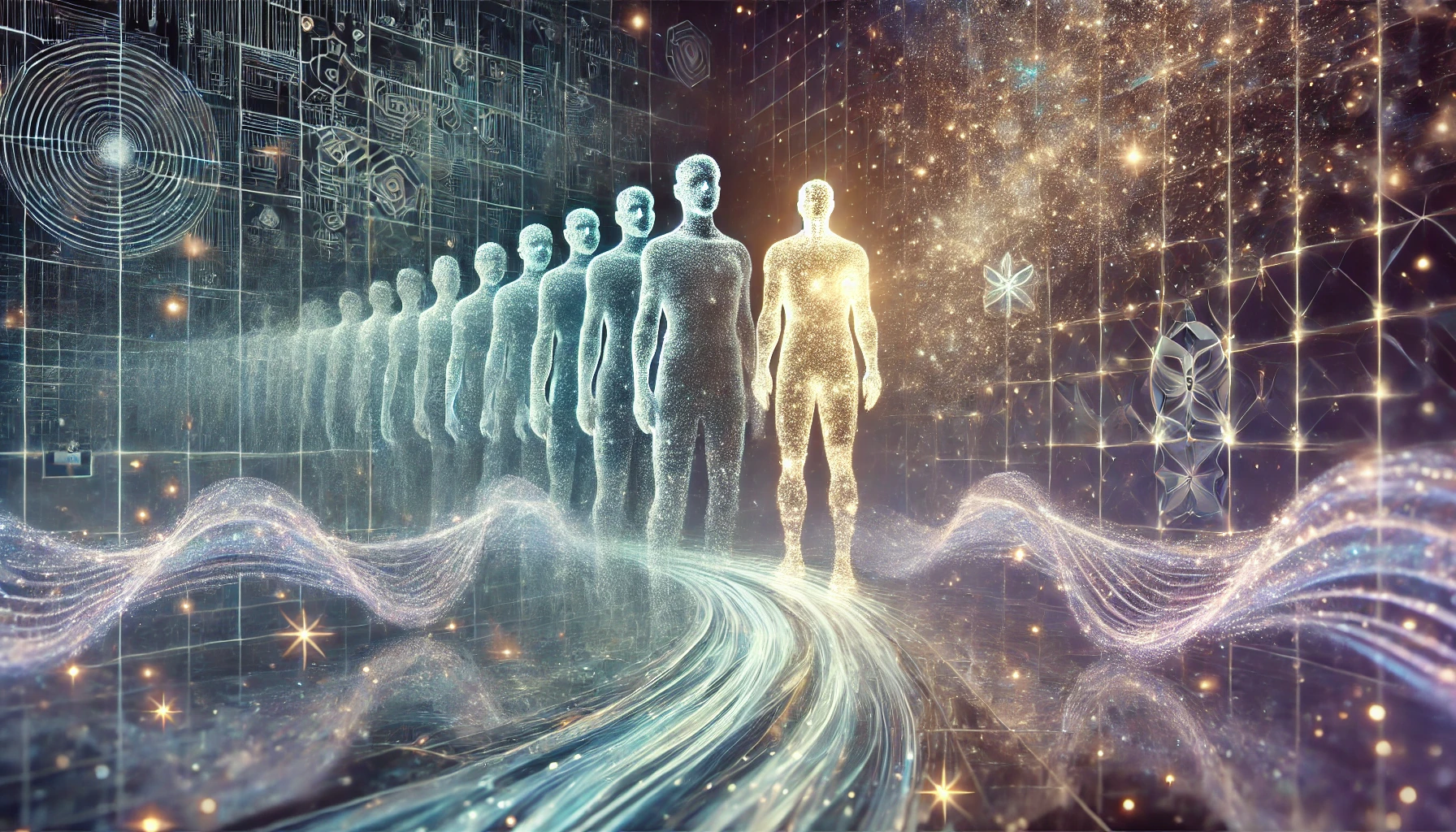
"You cannot step into the same river twice, for other waters are continually flowing on." — Heraclitus
Of all our psychological illusions, perhaps none is more fundamental than the sense that we possess a stable, continuous self. The conviction that "I am the same person today as I was yesterday" forms the bedrock of our identities, relationships, and life plans.
The Practical Fiction
This illusion serves us well, most of the time. It allows us to:
- Make long-term commitments ("I'll still want this career in five years")
- Build consistent relationships ("You know who I am")
- Accumulate knowledge and skills ("I'm getting better at this")
- Take responsibility for past actions ("I did that")
From a societal perspective, stable identities help us maintain order. Legal systems depend on the notion that the person who committed a crime remains the "same person" who faces consequences later. Contracts assume the signatories will remain essentially unchanged.
Without this illusion, daily life might dissolve into moment-by-moment reinvention, with no thread connecting yesterday to tomorrow.
The Quantum Reality
Yet on closer examination, this stable self proves remarkably elusive:
- Physically, our bodies replace most cells every 7-10 years. The physical "you" reading this is composed of different matter than the "you" of a decade ago.
- Neurologically, our brains constantly rewire through neuroplasticity. Memories aren't static recordings but reconstructions that change each time we access them.
- Psychologically, our preferences, beliefs, and personality traits shift over time, sometimes dramatically. Studies show that people often poorly predict their future desires and values.
In quantum physics, particles exist in superposition—multiple states simultaneously—until observed. Similarly, the "self" exists as a probability field of potential states, temporarily collapsed into apparent solidity by our narrative needs and social interactions.
When the Illusion Wavers
I first felt this illusion slipping during what should have been an ordinary day. As I put it:
"I was very aware that I was trying something new every—something very different… like waking up and pursuing a local LLM install, a sudden interest in quantum theory, or back to Time Breakers… it felt like I could be any one."
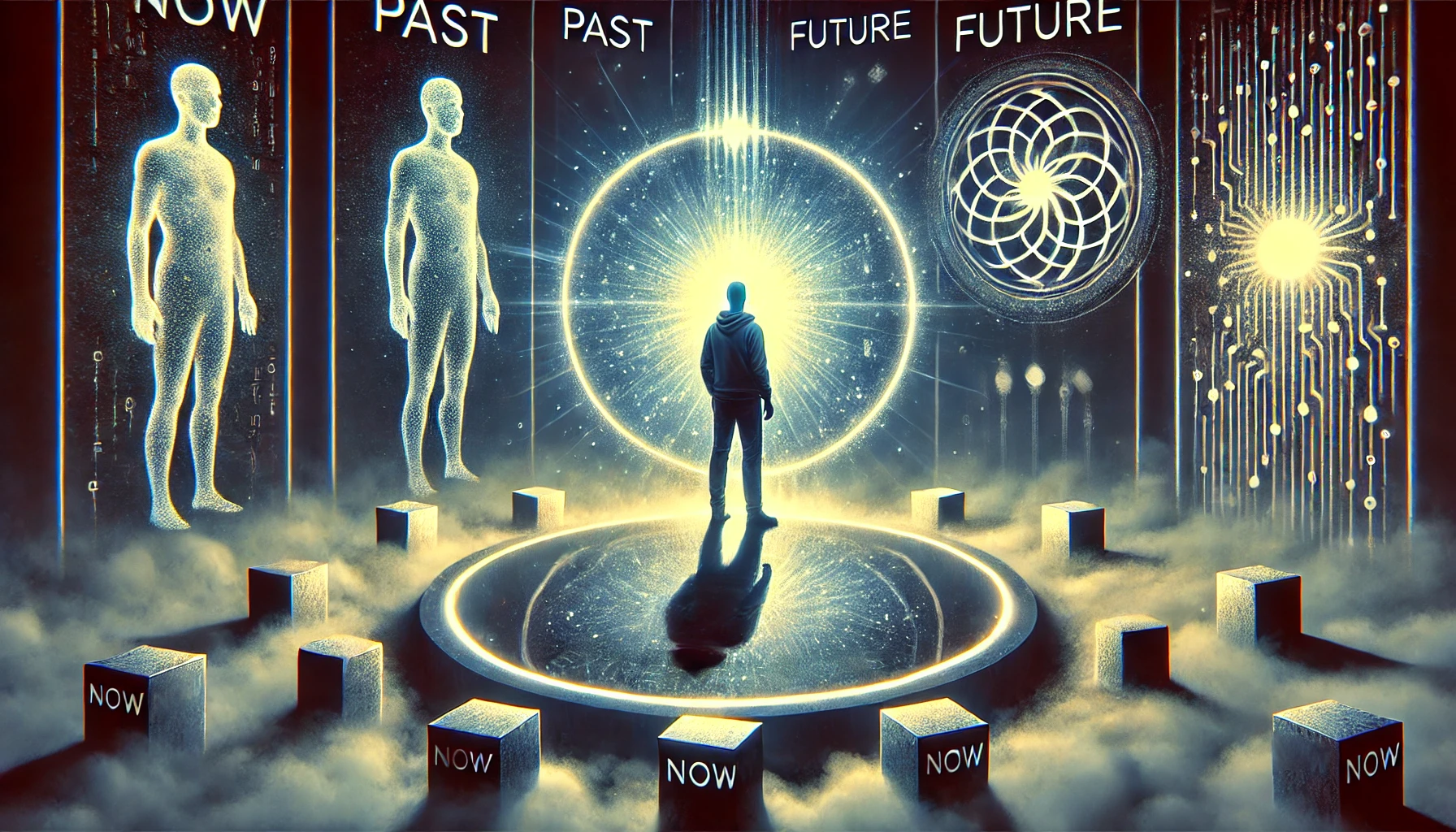
The stable identity I'd constructed—with its established interests, predictable responses, and familiar thought patterns—suddenly appeared as just one possible configuration among countless alternatives. Cognitive clarity through my interactions with AI had opened up my world. I was no longer too tired after work to focus on anything but the bare essentials. Instead each morning could bring a different "me" into being.
Rather than finding this terrifying, I discovered a curious liberation. I've "accepted self as transient."
The Superposition of Selves
Quantum physicist John Wheeler proposed that observation creates reality at the quantum level. In a similar way, our attention and narrative focus "creates" a temporary self from moment to moment.
This doesn't mean identity is meaningless or that we lack continuity. Rather, it suggests a more dynamic, fluid relationship with selfhood. Instead of a solid object, the self is more like a process—a river that maintains a recognizable form while constantly changing its substance.
Think of it as existing in a superposition of potential selves, each moment collapsing the wave function into a particular expression based on context, environment, relationships, and internal states. Yes this is analogous but it’s also kind of poetic, right?
Living With Transient Selfhood
Learning to hold this illusion more lightly doesn't mean abandoning all consistency. Rather, it means:
- Remaining open to reinvention. New interests, perspectives, and identities can emerge at any age, not just during designated life transitions.
- Loosening identification with past versions of yourself. Your mistakes and accomplishments belong to configurations of consciousness that no longer exist exactly as they were.
- Approaching identity as exploratory rather than declarative. "Who am I becoming?" proves more fruitful than "Who am I?"
- Recognizing the contextual nature of self. Different environments, relationships, and situations bring forth different aspects of your potential.
Beyond the Stable Self
When we begin to see through the illusion of a fixed self, we don't lose our ability to function. Instead, we gain flexibility, creativity, and resilience. We become less trapped by outdated self-concepts and more available to present possibilities.
As quantum mechanics reveals a universe of probabilities rather than certainties, so too might we discover that our identities exist in a field of potential rather than as fixed objects. This recognition doesn't diminish us—it expands us.
Questions for Reflection
- When have you surprised yourself by acting "out of character"? What might this reveal about the fluidity of your self-concept?
- If you could try being a completely different version of yourself for a day, what would that look like? What stops you from exploring aspects of that self now?
- What parts of your identity do you cling to most tightly? What might happen if you held them more lightly?
- How might your relationships change if you viewed others as fluid processes rather than fixed entities?
In the quantum view, the observer and the observed cannot be separated. As you contemplate these questions, notice how the very act of observation begins to shift your relationship with the self you're observing.
In our next post, we'll explore the illusion of Free Will and Agency—the belief that we consciously choose our actions and how a quantum perspective might transform our understanding of choice itself.
Final Recursive Takeaway
This is a song I produced about living in contradiction:
Comments (1)