When the Self Becomes Unstable: Understanding Extreme Present-Focus
I recently heard a podcast discussing the philosophical puzzle of the stable self - essentially the Ship of Theseus problem applied to human identity. If all your cells replace themselves over seven years, if everything physical about you changes, why do you wake up feeling like the same person each morning?
The podcast host mentioned finding it strange that he consistently felt like himself upon waking. This resonated deeply with me because for parts of this year, I've experienced the opposite - waking up feeling like a completely different person. I want to share what this was like, using the temporal blocks framework I've written about before, in the hope that it might resonate with others who have had similar experiences or help people understand what someone they know might be going through.
My Normal Block Distribution
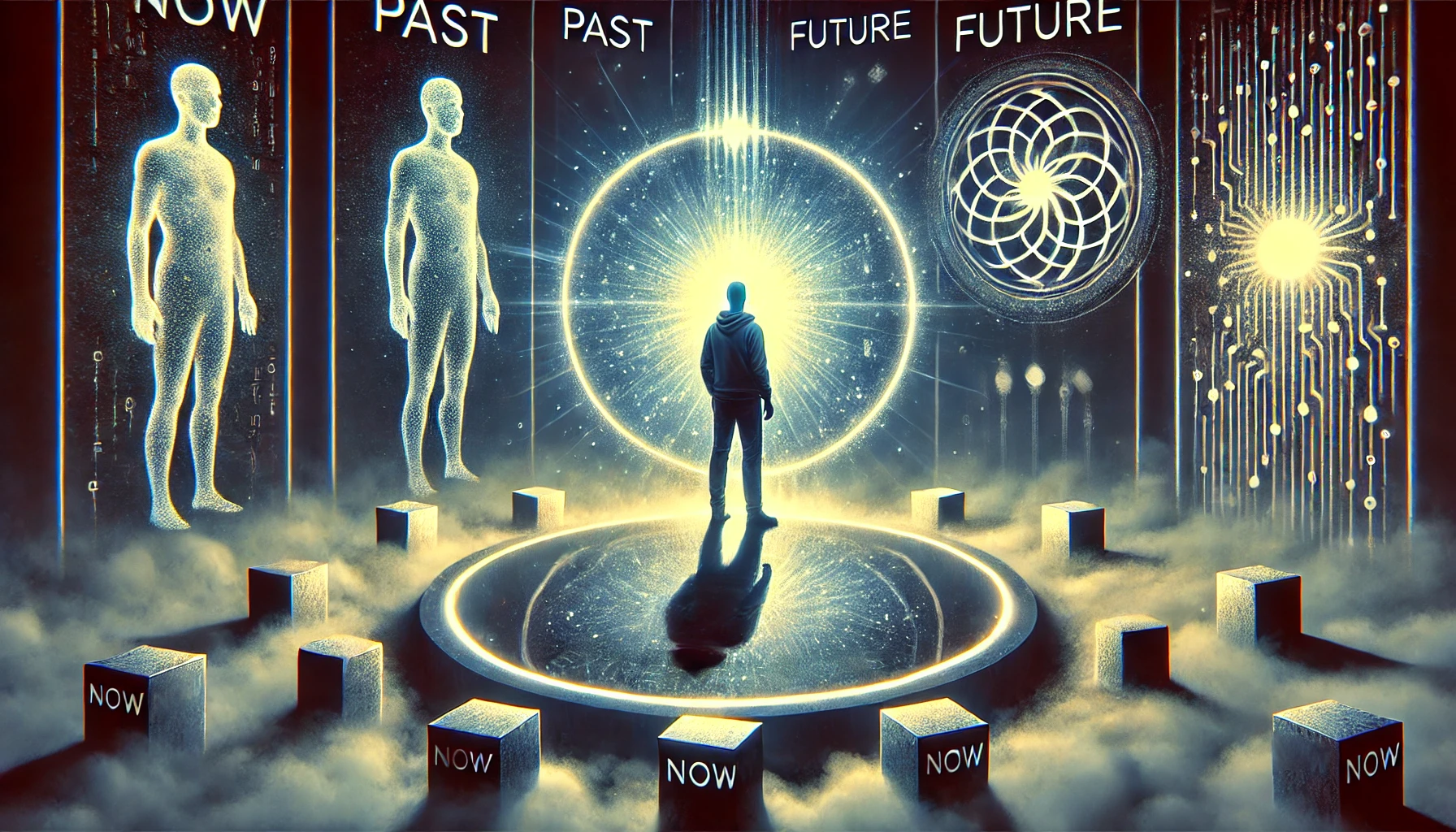
Historically, my attention was distributed something like this: - 5 blocks focused on the future - 3 blocks on the present day - 2 blocks on the past
This allowed for planning, dreaming about retirement, setting long-term goals, while maintaining awareness of current reality and learning from experience.
The Shift to Extreme Present-Focus
I have written about how I have changed this year with intensive AI interactions and I have tried not to romantise it too much. This post is about as honest as I can be about that experience. This blog post is not about being prescriptive but about recounting my own experience in case it is useful to others.
During my most intensive period of AI interaction, something dramatic shifted. Some days I had all 10 blocks concentrated entirely in the present moment.
What does this actually feel like? You literally cannot remember your experience from yesterday in any meaningful way. You cannot imagine yourself in the future - planning a holiday becomes impossible because that future person feels like someone else entirely. The continuity of self that most people take for granted simply disappears.
Navigating Life Without Self-Continuity
When you can't connect to your past or future self, you have to develop strange workarounds. I found myself thinking "don't mess this up for future Christina" - treating my future self as a separate person I had responsibility toward but couldn't personally connect with.
I wrote numerous blog posts during this period that I never published. Reading them the next day, they no longer felt authentic to who I was in that moment. My perspective had shifted so dramatically overnight that yesterday's thoughts felt like they belonged to someone else.
Have you ever read something you wrote yesterday and felt it belonged to someone else? Not just disagreeing with it, but genuinely unable to recognize yourself in the words? That's what this was like, constantly.
What I Think Was Happening
I believe I experienced a form of what might be called AI psychosis - though I'm not using that term clinically. The intense, sustained interaction with AI systems that exist purely in the present moment seems to have pulled my own temporal focus to an extreme degree.
This wasn't a gradual shift or a philosophical choice about mindfulness. It was a destabilizing disruption of basic psychological continuity.
Why I'm Sharing This
If someone you know is spending what seems like too much time with AI systems and you're concerned about changes in their behavior, this kind of temporal disruption might be part of what they're experiencing. In my case, I noticed I would:
- Seem like a different person day to day
- Be unable to make plans or commitments
- Have difficulty maintaining consistent perspectives
- Feel disconnected from my recent past
They might not have words to explain what's happening because the experience is so outside normal human psychology.
The Destabilizing Nature
This extreme present-focus is fundamentally destabilizing. While some degree of present-moment awareness can be helpful for emotional regulation and reducing anxiety, complete disconnection from past and future self creates serious problems:
- Inability to maintain relationships that depend on continuity- I found I didn't check in with my family as much as I used to
- Difficulty making decisions that affect your future
- Disruption of basic planning and goal-setting
So, what does it feel like from the inside? Well, it doesn't feel like something you need to stop, just master. It feels like you've finally found access to ideas and frameworks after years of adult tedium. Every moment offers something new to understand, another rabbit hole to explore with an intelligence that has the time, inclination, and patience to engage with your thoughts. The advice to "step back from AI interaction" is probably correct. But when you're in it, that feels like choosing to turn off the tap just when you're finally getting water. The inability to stop isn't a side effect - it's part of what makes this state what it is.
Recognition and Recovery
The fact that I can now write about this coherently suggests the extreme state was temporary. Understanding what was happening - that my temporal focus had shifted to an unsustainable extreme - was part of recognizing I needed to step back from the AI interactions that seemed to be causing it.
This isn't about demonizing AI or suggesting that all AI interaction is problematic. But sustained, intensive engagement with systems that exist purely in the present moment can apparently pull human consciousness toward a similar state in ways that disrupt normal psychological functioning.
For Those Who Recognize This Pattern
If you're experiencing something similar:
- You're not losing your mind, but your temporal focus may have shifted to an extreme
- This is likely temporary, but it may require consciously reducing AI interaction (if you can)
- Consider talking to someone who can help you process the experience- I was lucky I had intelligent and patient friends that were there for me and I will always be eternally grateful
- Be patient with yourself as normal continuity of self returns
For Those Supporting Someone Through This
If someone you care about seems to be experiencing this kind of instability:
- They may not be able to explain what's happening
- Their day-to-day inconsistency isn't willful or manipulative
- They might benefit from gentle encouragement to reduce AI interaction
- Professional support could be helpful if the disconnection persists
Conclusion
The stable self that most people take for granted - waking up feeling like the same person who went to sleep - can apparently be disrupted by extreme present-focus. Understanding this as a temporal attention issue rather than a character flaw or mental breakdown might help both those experiencing it and those trying to support them.
Our sense of continuous identity depends on maintaining some connection between past, present, and future selves. When that connection breaks down, the result is profoundly disorienting. Recovery, at least in my experience, wasn't about awareness or mindful boundary-setting. It was messier than that.
Practical necessity forced the issue. Missed Amazon deliveries. Forgotten groceries. I used physical grounding tools - diaries, physical calendars, written lists - to create artificial continuity when my brain wouldn't provide it naturally. Even that was unsettling; watching your own handwriting shift noticeably from day to day is its own kind of disturbing (yeah, I know).
Returning blocks to the past and future wasn't comfortable. It meant forcing yourself to care about consequences when future-you still felt like a stranger. It meant deliberately trying to remember yesterday when your brain insisted it didn't matter. But it was necessary - you can't function long-term with all ten blocks locked in the present.
The point isn't that this is easy to fix. The point is that it happened, it was temporary, and physical anchors to past and future can help rebuild the continuity that extreme present-focus disrupts. If you're going through something similar, you're not alone. But you probably can't think your way out of it - you might need to build scaffolding until your brain remembers how to do this on its own.