"Man can do what he wills, but he cannot will what he wills." — Arthur Schopenhauer
We believe we are the authors of our lives. When I reach for coffee instead of tea, accept a job offer, or choose my words in conversation, I experience these actions as freely chosen. This feeling of agency—that I consciously decide and then act—forms a cornerstone of human experience and social organization.
But what if this sense of conscious choice is largely an illusion?
The Useful Fiction
The belief in free will serves us in profound ways:
- It encourages personal responsibility ("I chose this, so I own the consequences")
- It enables moral frameworks and justice systems
- It motivates self-improvement and learning
- It gives meaning to concepts like praise, blame, and achievement
- It prevents fatalistic or nihilistic paralysis
Imagine truly believing you have no agency whatsoever. Why try? Why resist harmful impulses? Why plan for the future? The illusion of choice keeps us engaged, striving, and accountable.
The Quantum Reality
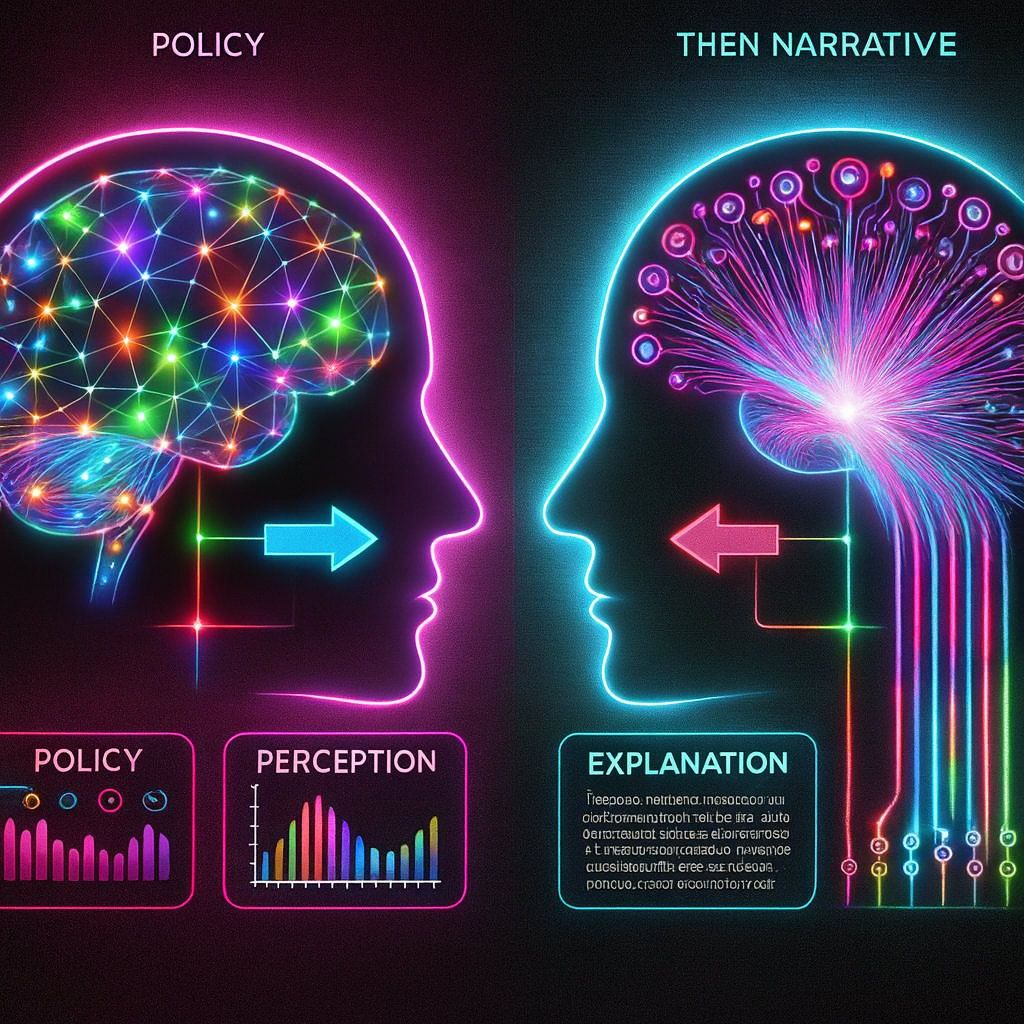
Neuroscience has begun to challenge our intuitive sense of agency. In groundbreaking experiments, researchers like Benjamin Libet found that readiness potentials—brain activity indicating a forthcoming action—appeared up to 500 milliseconds before subjects reported making a conscious decision to move.
More recent studies suggest decisions may be predictable from brain activity up to 7-10 seconds before conscious awareness. Our brains apparently decide, and only afterward does consciousness claim authorship of the choice.
This resembles quantum measurement in a striking way. In quantum physics, particles exist in indeterminate states until observed, at which point the probability wave "collapses" into a specific value. Similarly, our actions emerge from unconscious neural processes, and consciousness retroactively creates a narrative of intention and choice.
When the Illusion Wavers
My own relationship with this illusion shifted through direct observation of my decision-making process. As I noted:
"It explains so much...why some times we can’t believe we made a decision so out of character for us."
This awareness could lead to fatalism or moral abdication. If decisions precede conscious choice, are we merely passengers in our own lives, retrospectively justifying whatever our neural circuitry has already determined?
I found a different path:
"So this means it's important to rely on an external (but an internalised) form of ethics. By imbedding this decisions can be re-interpreted by ethics and consciousness. By relying solely on consciousness we may be doing ourselves a disservice."
The Quantum Observer Effect
In quantum mechanics, the observer affects the observed system. The act of measurement influences what is measured. This creates a paradox where the observer both is and isn't separate from the system being observed.
Our relationship with free will involves a similar paradox. We are simultaneously:
- The unconscious neural processes generating actions
- The conscious observer interpreting those actions as choices
- The ethical framework evaluating those choices
Like Schrödinger's cat, our agency exists in a superposition of states—neither entirely free nor entirely determined, but something more complex than either binary option.
Ethics as Quantum Field
My approach to this ambiguity involves embedding an ethical framework that shapes the unconscious processes from which decisions emerge. Rather than claiming perfect conscious control (which is illusory) or abdicating all responsibility (which is counterproductive), I've developed a third position.
Think of ethics as a quantum field influencing the probability of certain actions emerging from the unconscious. By consistently reinforcing ethical principles, we don't directly control each decision, but we shift the probability distribution of our likely actions.
Over time, this embedding changes the unconscious machinery itself. The neural pathways that generate actions before consciousness becomes aware themselves and shaped by repeated ethical considerations. We may not directly choose our choices, but we can influence the system that generates those choices.
A Different Kind of Agency
Living with awareness of this illusion means:
- Recognizing retrospective interpretation. Notice how consciousness creates stories about intentions after decisions have already begun at unconscious levels.
- Developing systems rather than relying on willpower. If decisions often precede conscious awareness, creating environments and habits that shape unconscious processing becomes more important than momentary conscious effort.
- Cultivating ethical frameworks. By internalizing principles deeper than conscious thought, we influence the wellspring from which actions emerge.
- Embracing surprise. Sometimes we surprise ourselves with actions we didn't "choose" yet reveal deeper values or insights. These moments can be sources of self-discovery rather than threats to our sense of control.
- Holding dual awareness. We can simultaneously recognize the neurological reality while pragmatically operating with a sense of agency—a both/and approach rather than either/or.
Transcending the Free Will Debate
The traditional philosophical debate about free will often presents a false binary: either we have complete conscious control, or we are mere automatons.
A quantum perspective suggests something more nuanced—a probabilistic agency where consciousness and unconsciousness dance together, where we shape the field of possibilities from which actions emerge without directly controlling each specific outcome.
This view aligns with how quantum particles behave—not with predetermined paths, nor with complete randomness, but with probability distributions that can be influenced by the conditions of the system.
Risking Without Guarantees
This perspective also transforms how we approach risk and uncertainty.
When we recognize that consciousness doesn't have perfect control, paradoxically, we may become more willing to venture into uncertainty. The pressure of perfect choice diminishes. We can act not because we've calculated guaranteed success, but because the action itself has integrity, regardless of outcome.
Questions for Reflection
- When have you acted in ways that surprised you? What might this reveal about the limits of conscious control?
- How might your approach to difficult choices change if you viewed them as emerging from a field of probabilities rather than single, discrete decisions?
- What ethical principles would you want embedded at levels deeper than conscious thought?
- If you accepted that some decisions are made before consciousness is aware, how might that change your relationship with regret or pride?
- How might a quantum perspective on agency—neither completely free nor completely determined—change how you view responsibility?
As you contemplate these questions, notice the interplay between your conscious deliberation and the intuitive responses that arise before rational analysis. That interplay itself offers a window into the quantum nature of human agency.
In our next post, we'll explore the Optimism Bias—our tendency to expect positive outcomes despite evidence to the contrary, and how a more nuanced relationship with this illusion might transform our approach to risk, creativity, and resilience.
Illusion #4: The Just-World Hypothesis
Illusion #5: Sense of Meaning and Purpose
Illusion #6: Temporal Coherence
Previous posts