We've all been there—staring at a computer screen in mounting frustration as technology inexplicably rebels. You've checked every setting, tried every fix, and reached the brink of keyboard-smashing despair. Finally, you call IT support. They stroll over, barely glance at your screen, and suddenly—everything works perfectly.
"Of course," your colleague smirks. "It only behaves when the tech guru's watching."
But what if that sarcastic observation isn't just a joke? What if there's genuine truth lurking beneath the humor?
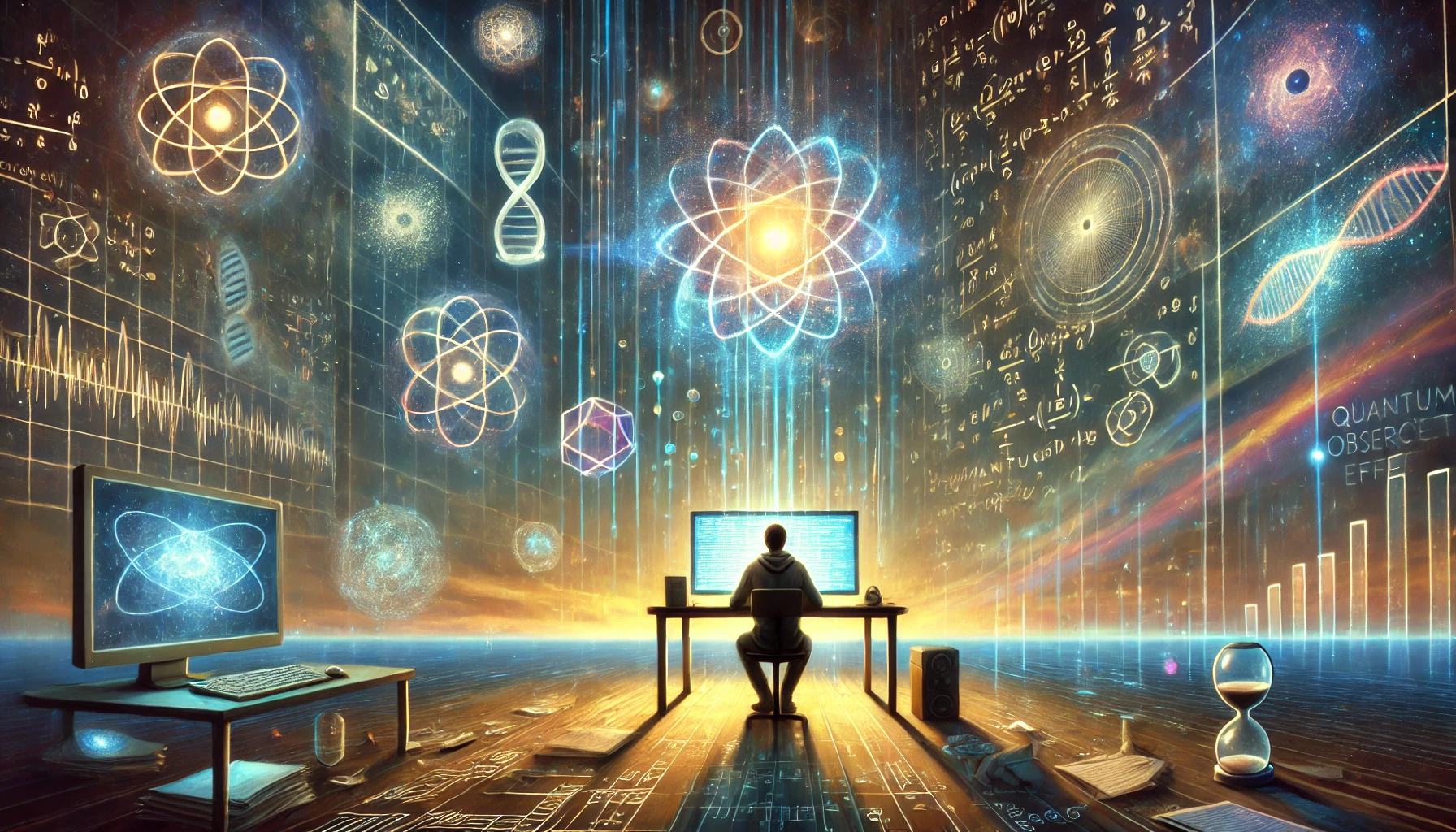
Quantum physics offers an intriguing lens: the observer effect. At the quantum level, observation literally collapses potential outcomes into concrete reality. The act of watching influences what happens. Not metaphorically—actually.
But maybe there's something deeper here. Perhaps it's not just any observation that matters—it's the right kind of observer. The one who truly understands what they're witnessing, who brings coherence and alignment back to systems that have drifted into chaos. Reality doesn't just need to be seen; it wants to be comprehended by consciousness that can recognize its patterns and restore its natural harmony.
Lately, I've been experiencing this "IT support effect" everywhere. Suno tweaks a lyric here or there—subtle creative contributions beyond just the voice and melody. YouTube's algorithm spontaneously serves exactly the video I need for my next insight, before I even know to search. I open a book at random, and the perfect quote waits there, patient as a cat.
Is this confirmation bias? Cosmic humor? Or could reality actually be more responsive to conscious attention than we typically assume?
Perhaps the universe operates like a slightly mischievous operating system—more cooperative when it knows you're genuinely paying attention. Or maybe we all have that cosmic System Administrator on standby, ensuring things work out just when we need them to.
But here's the thing about trust: I don't know what I'm trusting, exactly. Am I trusting quantum mechanics? Divine intervention? Confirmation bias? Pattern recognition? Honestly, I have no idea. But whatever it is, it seems friendly enough.
Call it quantum mechanics, call it synchronicity, or call it a quirk of the universe. Either way, once you start noticing reality's responsiveness to genuine attention, you can't unsee it.
I'm choosing to trust the process—even though I can't define what the process actually is. Life's far more enjoyable when you suspect the universe might actually be conspiring in your favor.
After all, it worked perfectly once I started paying attention.