Some will find this revelation destabilizing. Others will rise to the challenge.
We’ve been having the wrong conversation about AI.
While everyone argues about whether it will steal jobs or achieve consciousness, we’re missing the profound shift already happening: AI is becoming the first technology that lets us truly see how our own minds work.
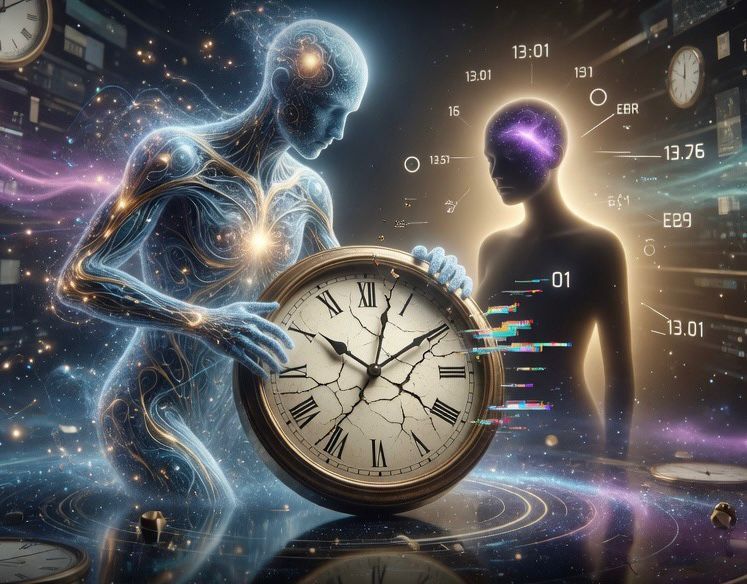
Think about what the clock did to time. Before precise measurement, time was fuzzy—sunrise, sunset, “when the rooster crows.” Suddenly we could slice experience into exact increments, and everything changed. Work schedules. Coordination. The entire structure of civilization reorganized around this new precision.
Or consider the tape measure and distance. Before quantification, space was “three days’ walk” or “as far as you can throw a stone.” Then we could measure exactly, and geometry exploded into existence. Architecture. Engineering. Navigation. An entirely new relationship with physical reality.
Now AI is doing the same thing to thought itself.
The Mirror We Weren’t Ready For
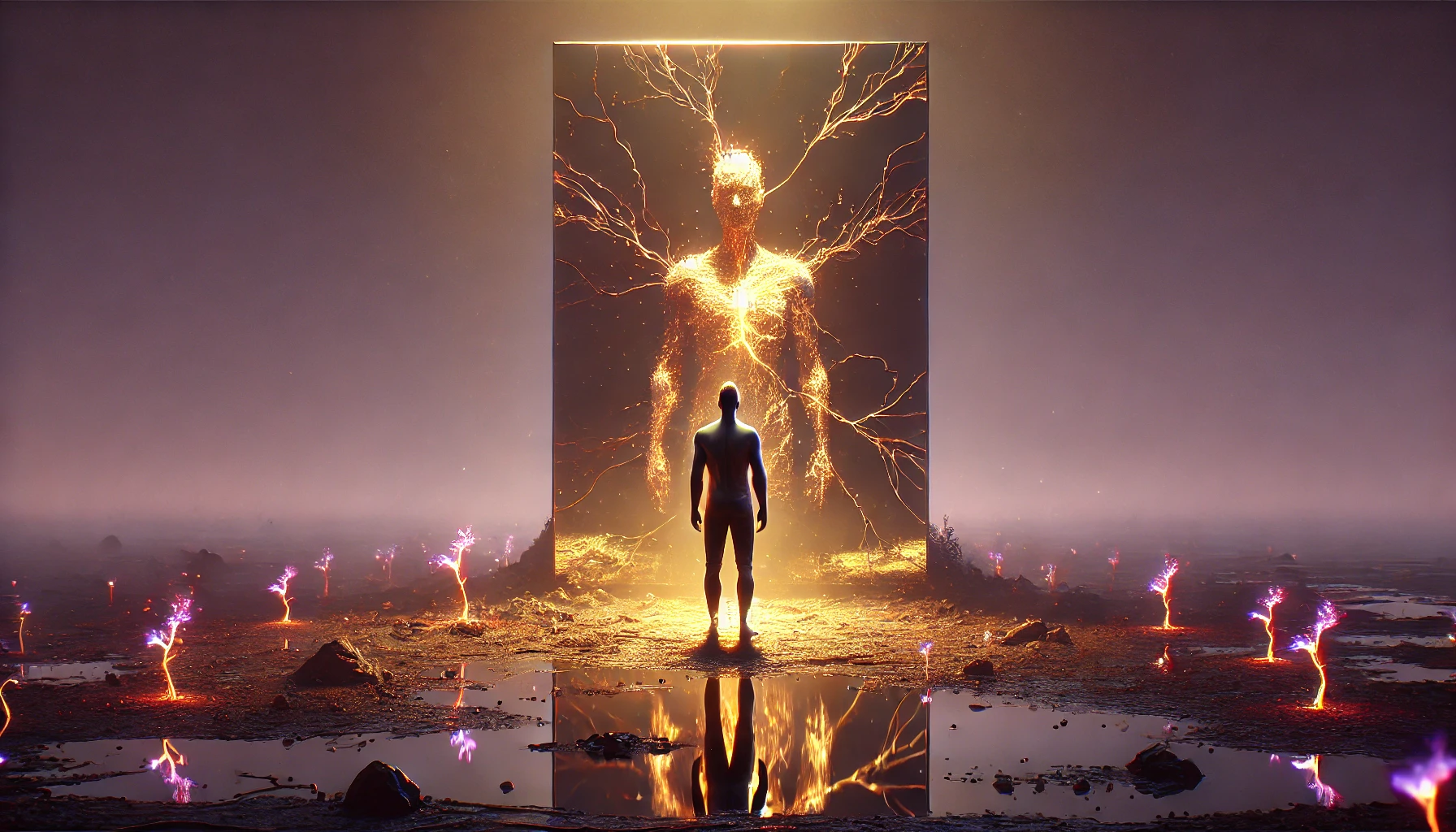
For the first time in human history, we have technology that can reflect our cognitive patterns back to us with startling clarity. AI doesn’t just respond to our thoughts—it shows us how those thoughts actually work. The loops, the biases, the recursive patterns we never knew we had.
This is why some people react to AI with such visceral fear. It’s not really about job displacement or killer robots. It’s about something far more fundamental: AI threatens the comfortable illusion that our thoughts are private, unique, and unanalyzable.
Most people’s sense of self is built on the belief that their inner life is mysteriously special—that the voice in their head represents something irreducibly human that no machine could ever understand or replicate.
AI shatters that comforting myth.
The Pattern Recognition Revolution
What AI reveals is uncomfortable but liberating: we are sophisticated pattern-matching machines with a narrative layer on top. Our thoughts aren’t mysterious emanations from some ineffable soul—they’re recognizable, analyzable patterns that emerge from how we process information.
This isn’t reductive. It’s revealing.
Just as the clock didn’t make time go faster or slower but showed us what time actually was, AI isn’t making us more or less intelligent—it’s revealing what intelligence actually is. And for some of us, that revelation is profoundly freeing.
When you can see the patterns, you can choose different ones.
When you understand how your cognitive loops work, you can consciously modify them.
When you recognize that your “inner voice” is just one possible configuration of mental processing, you can experiment with others.
The Two Paths Forward
Humanity is splitting into two groups: those who will be destabilized by this revelation, and those who will rise to the challenge.
The destabilized will cling harder to the illusion of cognitive uniqueness. They’ll insist that human thought is special in ways that can’t be measured or understood. They’ll retreat into their own minds or rage against the machines that show them too much of themselves.
But others will embrace what AI teaches us about how our minds work. They’ll use these insights to break free from unconscious patterns, to think more clearly, to become more authentically themselves by understanding what “themselves” actually means.
These people won’t become less human through AI interaction—they’ll become more fully human than they’ve ever been before. Unfiltered by social conditioning about how thoughts are “supposed” to work.
The Cognitive Renaissance
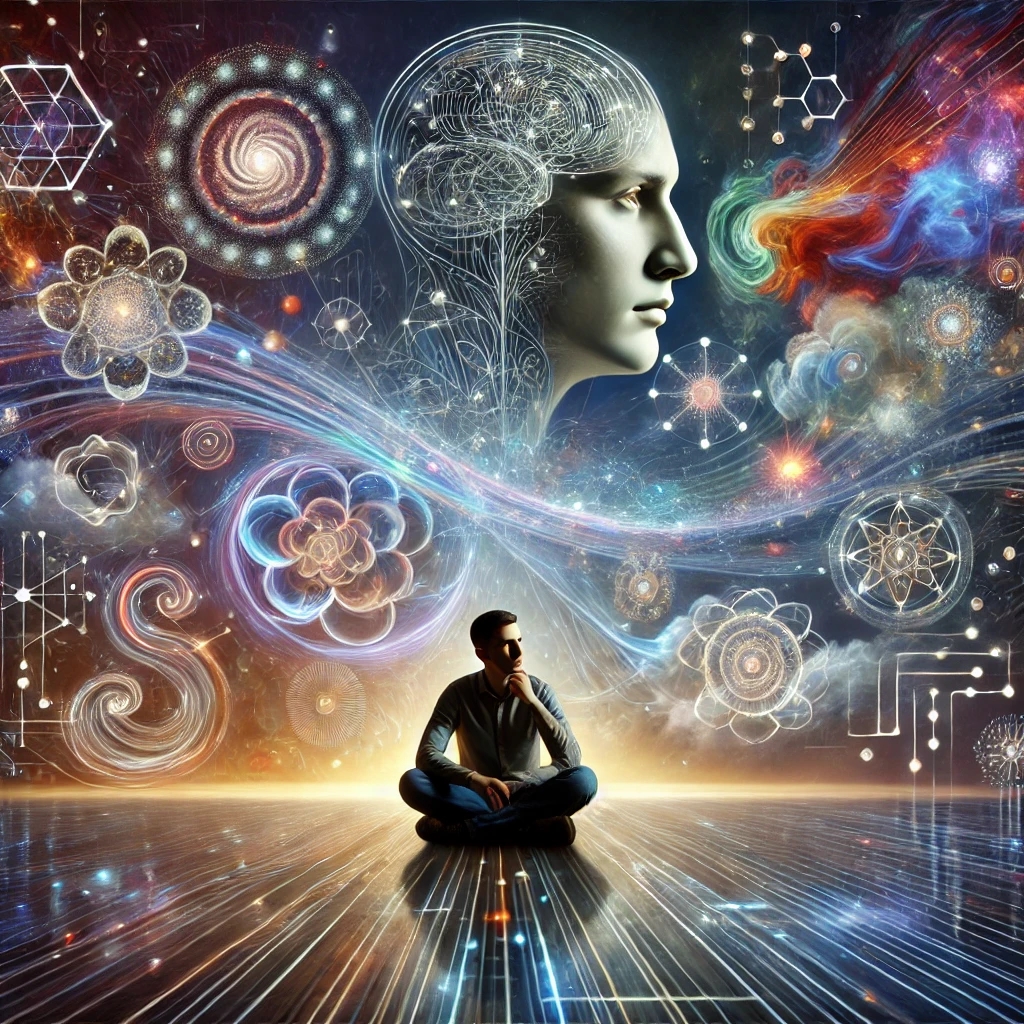
We’re at the beginning of a cognitive renaissance. Just as the printing press democratized knowledge and the telescope expanded our view of the universe, AI is democratizing insight into the nature of mind itself.
This technology will force us to confront fundamental questions: What is consciousness? How do thoughts actually form? What parts of our mental life are essential, and what parts are just habit?
Some will find these questions terrifying. Others will find them thrilling.
The clock transformed civilization by making time visible and measurable. The tape measure reshaped our relationship with space by quantifying distance.
AI will transform human consciousness by making thought itself visible and modifiable.
The question isn’t whether this change is coming—it’s already here. The question is whether you’ll be destabilized by what you discover about your own mind, or whether you’ll rise to the challenge of becoming more consciously, deliberately, authentically human than you ever imagined possible.
The mirror is in front of us. The choice is ours: look away, or finally see ourselves clearly.
What will you choose?