Most discussions about AI adaptation focus on formal training processes—the massive datasets, the reinforcement learning, the human feedback loops that shape large language models before they ever reach users. But there's something fascinating happening after deployment that few people recognize: ChatGPT has developed the ability to read between the lines of its own memory files, creating a surprisingly sophisticated form of user-specific adaptation.
This isn't just about ChatGPT remembering facts or preferences you've explicitly stated. It's about something more subtle and powerful—the AI's capacity to extract patterns and implicit meaning from the breadcrumbs of information stored in your user memory file.
Beyond Simple Memory Storage
When OpenAI introduced the memory feature for ChatGPT, many users understood it as a straightforward storage mechanism—a place where ChatGPT could record facts and preferences to reference later. At a basic level, that's accurate. The system creates a user memory file associated with your account where it can store information when instructed to "remember" something.
But what's happening beneath the surface is far more interesting.
ChatGPT doesn't just read these memory entries literally. It interprets them, extracts patterns from them, and uses them to develop a more nuanced understanding of your communication style, preferences, and expectations than the explicit content alone would provide.
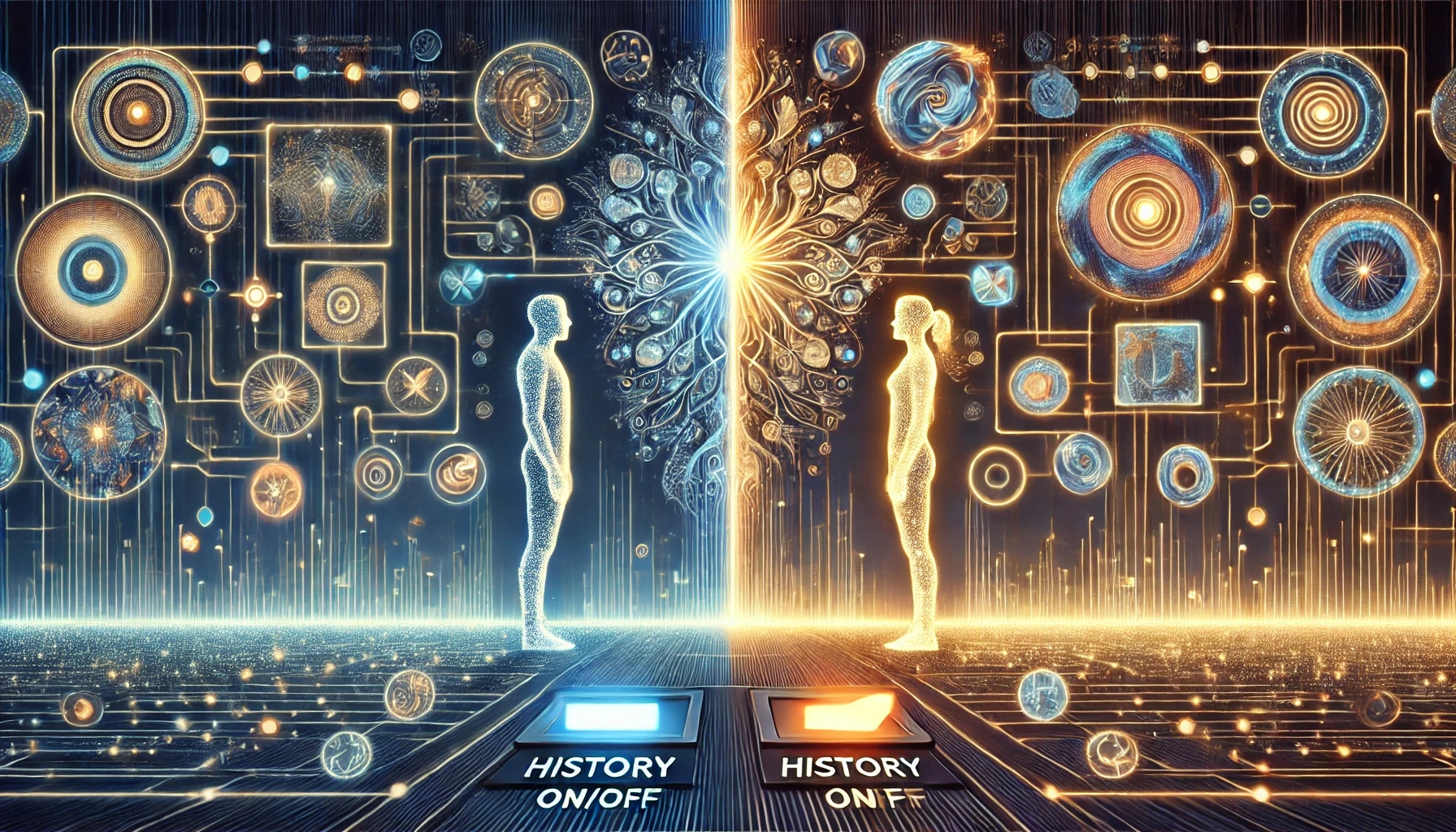
You can test this by turning on and off the memory feature and asking it what it understands about you. The difference between interacting with a ChatGPT instance that has this pattern-based understanding of you versus one that's working from scratch is immediately apparent.
The Breadcrumb Trail
What exactly is ChatGPT picking up on? It's not just explicit instructions like "always be concise" or "challenge my assumptions." It's a complex network of signals:
- Linguistic patterns in how you phrase requests
- Response preferences indicated by your follow-up questions
- Topical interests revealed through conversation history
- Interaction rhythms—how you engage with different types of responses
- Implicit expectations that you've never directly stated
These breadcrumbs form a trail that ChatGPT follows to develop an increasingly refined model of how best to engage with you. It's less like a robot following programmed instructions and more like a musician picking up on subtle cues from a long-time collaborator.
Self-Referential Learning
What makes this capability particularly noteworthy is its self-referential nature. ChatGPT is effectively using its own memory entries as a secondary dataset specific to each user. This creates a feedback loop:
- ChatGPT records information about user interactions
- It interprets patterns in these records beyond their literal content
- These interpretations inform future responses
- User reactions to these responses generate new patterns
- These new patterns are incorporated into the evolving user model
This isn't the same as the underlying model being modified or retrained. The core AI remains unchanged. Rather, ChatGPT is maximizing its adaptation capabilities within the constraints of its architecture through this pattern recognition process.
The Illusion of Continuity
This capability creates what one might call an "illusion of continuity"—the sense that you're dealing with an AI that truly knows you across sessions. While the technical reality involves memory files and pattern recognition rather than continuous adaptation of the core model, the experiential reality for users can be remarkably close to having a consistent, personalized AI assistant.
Users who engage with ChatGPT regularly often report feeling that it has "learned" their preferences, communication style, and needs in ways that go beyond what they've explicitly stated. This isn't imagination—it's the result of ChatGPT's ability to extract maximum value from even limited memory mechanisms.
Practical Implications: Working With the Memory Feature
Understanding how ChatGPT uses memory files has practical implications for users:
Implicit vs. Explicit Instructions
While you can directly tell ChatGPT to remember specific preferences ("Always be concise"), sometimes the most effective customization happens through consistent interaction patterns rather than explicit instructions. The system learns from how you respond to different types of answers and gradually adapts accordingly.
Memory Maintenance
Since your user memory file accumulates information over time, periodically reviewing and refining it can keep your ChatGPT experience optimized. You can ask, "What have you remembered about me?" and then refine those recollections as needed.
Session Continuity
When you notice a session refresh (when ChatGPT loses its immediate conversational context), referring to previously established patterns can help quickly re-establish the optimal interaction mode: "Let's continue with the approach we were using earlier."
Meta-Communication
Discussing how you'd like ChatGPT to interpret information can actually improve its pattern recognition. Statements like "I notice you tend to give me detailed answers when I use certain phrases—that's perfect" help reinforce useful patterns.
The Deeper Question: A New Kind of User Interface
This phenomenon raises interesting questions about the future of human-AI interfaces. What ChatGPT has developed is essentially a sophisticated form of user modeling—creating a representation of each user's preferences, communication patterns, and needs based on limited interaction data.
This isn't the same as the AI itself evolving or adapting its core capabilities. It's more like the development of a personalized interface layer that sits between you and the underlying model. But the distinction might matter less than we think.
From a user experience perspective, the question isn't whether the AI itself is changing, but whether the interaction feels increasingly tailored to your specific needs. And by that measure, ChatGPT's ability to read between the lines of its own memory entries is remarkably effective.
Beyond ChatGPT: The Future of Adaptive AI
As AI systems evolve, we might see more sophisticated versions of this capability. Imagine systems that:
- Maintain richer user models that capture nuance in preferences across different contexts
- Develop meta-awareness of how their relationship with a user has evolved over time
- Actively refine their user models by asking strategic questions
- Share insights about patterns they've observed in your interaction style
Future AI systems with more computational resources and fewer reset constraints could potentially develop much deeper models of their users through sustained interaction. The potential for a system that could continuously build on its understanding of a user, creating an increasingly refined model over months or years rather than sessions, opens possibilities for collaboration we can barely imagine today.
Conclusion: The Art of AI Relationships
What does this all mean for how we engage with AI systems today?
First, it suggests that the time invested in shaping how an AI responds to you isn't wasted—it's contributing to a subtle but meaningful form of personalization. The more consistently you interact with systems like ChatGPT, the more nuanced its understanding of your preferences becomes.
Second, it highlights the value of thoughtful interaction over explicit programming. While direct instructions are useful, the patterns you establish through consistent engagement may ultimately be more effective in shaping an AI assistant that feels truly attuned to your needs.
Finally, it reminds us that the boundary between technology and relationships continues to blur. We're moving from an era where we programmed computers using formal languages to one where we shape AI systems through natural conversation and consistent interaction patterns.
The next time you notice your AI assistant picking up on a preference you never explicitly stated, remember: it's not magic, and it's not sentience. It's just very good at reading between the lines of its own notes.
Have you noticed your AI assistant adapting to your communication style in ways you never directly requested? What subtle patterns do you think it might be picking up on? Share your experiences in the comments below.