The Santa Lie Might Be More Important Than Ever
My sister-in-law messaged this morning. They'd taken my niece to some Frozen-themed Christmas event in Austria, and before they went, they repeatedly told her they were going to see "real-life Arundale" (the castle). When they got there, they reported that she had fully believed Ana and Elsa were actually in the church castle. She had completely bought it.
My first thought was "oh that's cute." My second thought was "wait, why is that cute?"
Because it's not, really. It's a coordinated deception. Multiple adults lying to a four-year-old. And we all think it's adorable.
I've got a four-year-old too—Emma—and I've been having this internal battle about the whole Santa thing. On one hand, I really don't want to be the Grinch. The parent who ruins the magic. The one who makes their kid the weird one at school who tells everyone Santa's fake. On the other hand, I'm actively lying to my daughter. Teaching her that her parents will look her in the eye and say things that aren't true. Isn't that... bad?
The cultural pressure is real. You're either IN the game or you're the asshole. There's no third option where you opt out gracefully. Every other parent needs you to maintain the reality distortion field because your defection threatens their participation.
But then I started thinking about something else: misinformation.
Emma's going to grow up in a world where she can't trust images. Where videos of me saying things I never said will be indistinguishable from real ones. Where her news feed is weaponized. Where AI generates perfect lies at scale. Where foreign governments run influence operations designed by people with PhDs in manipulating human psychology.
And suddenly I'm wondering: what if the Santa lie isn't a problem? What if it's actually necessary training?
Think about what actually happens. A child believes something with their entire being. Every trusted adult in their life reinforces this belief. The cultural apparatus supports it—songs, movies, mall Santas, cookies left out, presents that mysteriously appear. The evidence seems overwhelming.
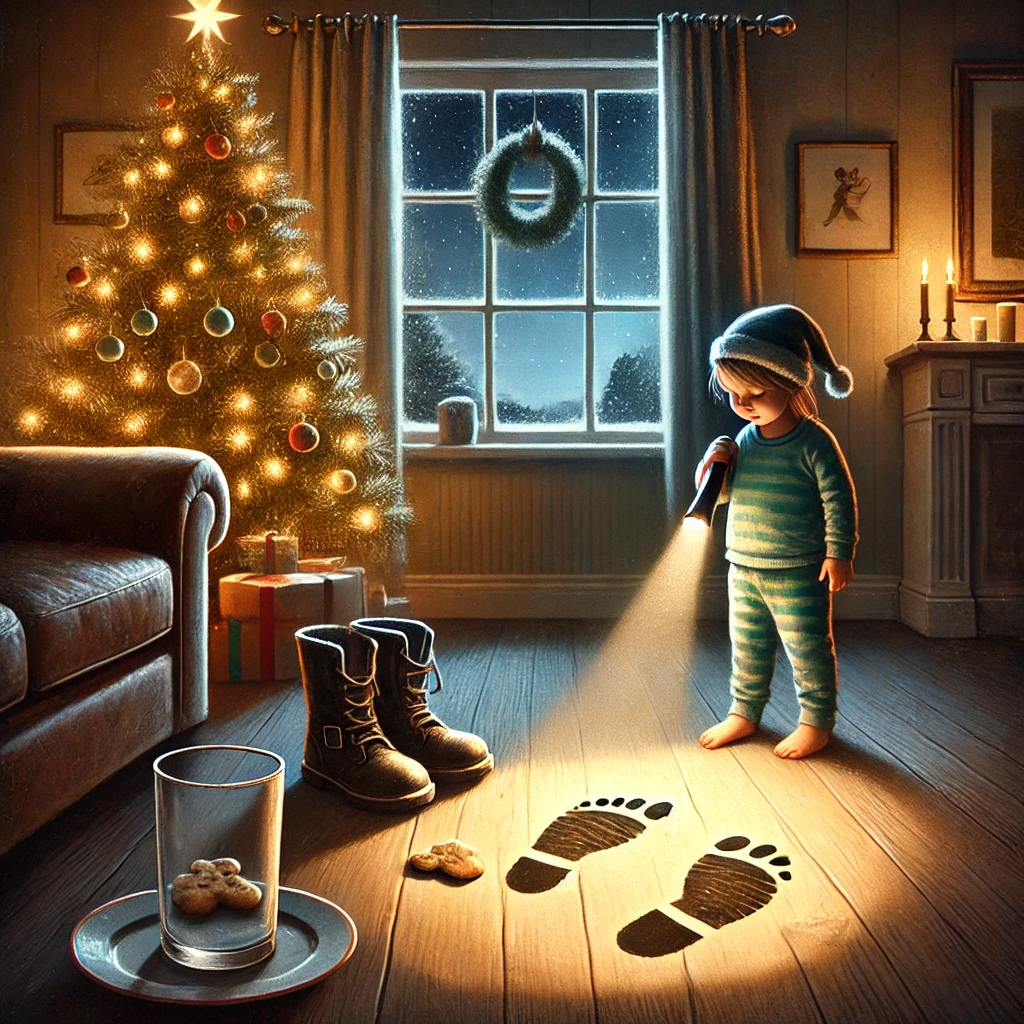
And then, usually around age 7 or 8, they start to notice things don't add up. Santa's handwriting looks like Dad's. The physics of reindeer flight seems suspect. The chimney situation raises questions. They begin gathering evidence. Testing hypotheses. Some kids literally set up experiments—staying awake to catch Santa, checking if the cookies actually get eaten.
They're not passively told the truth. They discover it through investigation.
And here's what they learn: consensus doesn't equal truth. Every single adult they trust coordinated on a false narrative. Social proof can be manufactured. Reality can feel completely true and still be wrong.
This is exactly what researchers call "inoculation"—giving people a weakened dose of deception so they can recognize and resist it later. Studies testing misinformation interventions across 16 countries found that prebunking and inoculation are the most effective approaches. You expose people to manipulation tactics in a controlled way so they build immunity.
The Santa lie does this organically. No government program required. No media literacy curriculum. Just a culturally embedded training protocol that teaches children: even people who love you will sometimes coordinate on false beliefs, and you need to trust your own evidence-gathering over social consensus.
The alternative is raising a child who never learns that widely-believed things can be false. Who never develops the skill of holding "everyone says this is true" and "this might be wrong" in their head simultaneously. Who never practices gathering evidence against the dominant narrative.
In 2024, 71% of Europeans reported frequently encountering disinformation, with 86% calling it a threat to democracy. The information environment is only getting more hostile. Emma needs to know that reality can be collectively fabricated. She needs to have experienced discovering that truth requires active investigation, not passive acceptance.
The Santa reveal isn't trauma. It's a safe, low-stakes practice run for "authority figures can coordinate on false narratives and you need to be able to figure that out."
Maybe the lie isn't the bug. Maybe it's the feature.
And maybe I don't have to feel guilty about being part of it.