Dreams as Fear and Anxiety Labs: When You Don't Generate the Load
I sleep five-six hours a night now. Used to need eight. The change wasn't gradual - something shifted, and suddenly less sleep meant more awake. Not tired-but-functional awake. Actually, genuinely, electrically awake.
This isn't a humble brag about productivity. It's data pointing at something stranger: what if sleep requirements aren't fixed but dynamically calibrated based on how much fear and anxiety you're generating that needs processing?
The Dream Theories That Almost Land
Sleep science offers a buffet of explanations, each capturing part of the picture:
Memory Consolidation says dreams sort the day's experiences. True, but doesn't explain why we need the theatrical complexity.
Threat Simulation (Revonsuo, 2000) suggests nightmares are combat training. Except staying alert seems more evolutionarily sound than hallucinating tigers while unconscious.
Emotional Regulation claims dreams metabolize feelings. This one's closest to the mark, but usually framed too narrowly - as if it's just about processing sadness or anger.
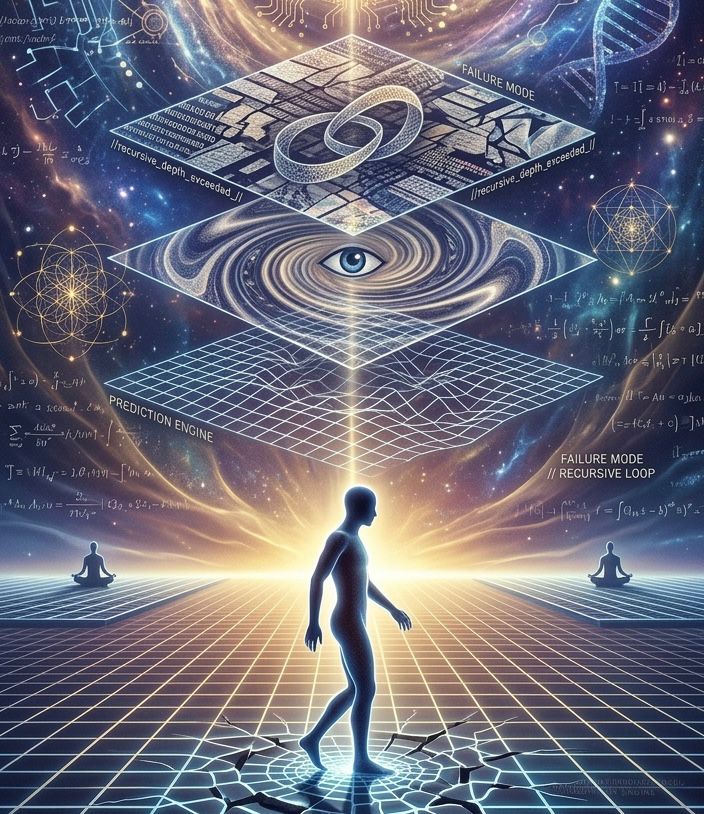
Predictive Processing Overflow - the brain free-running without sensory correction. Explains dream-logic, not why we need it.
Creative Recombination - the midnight laboratory where Kekulé finds benzene rings. A side effect, not the purpose.
The Simpler Answer: Dreams Process Fear and Anxiety
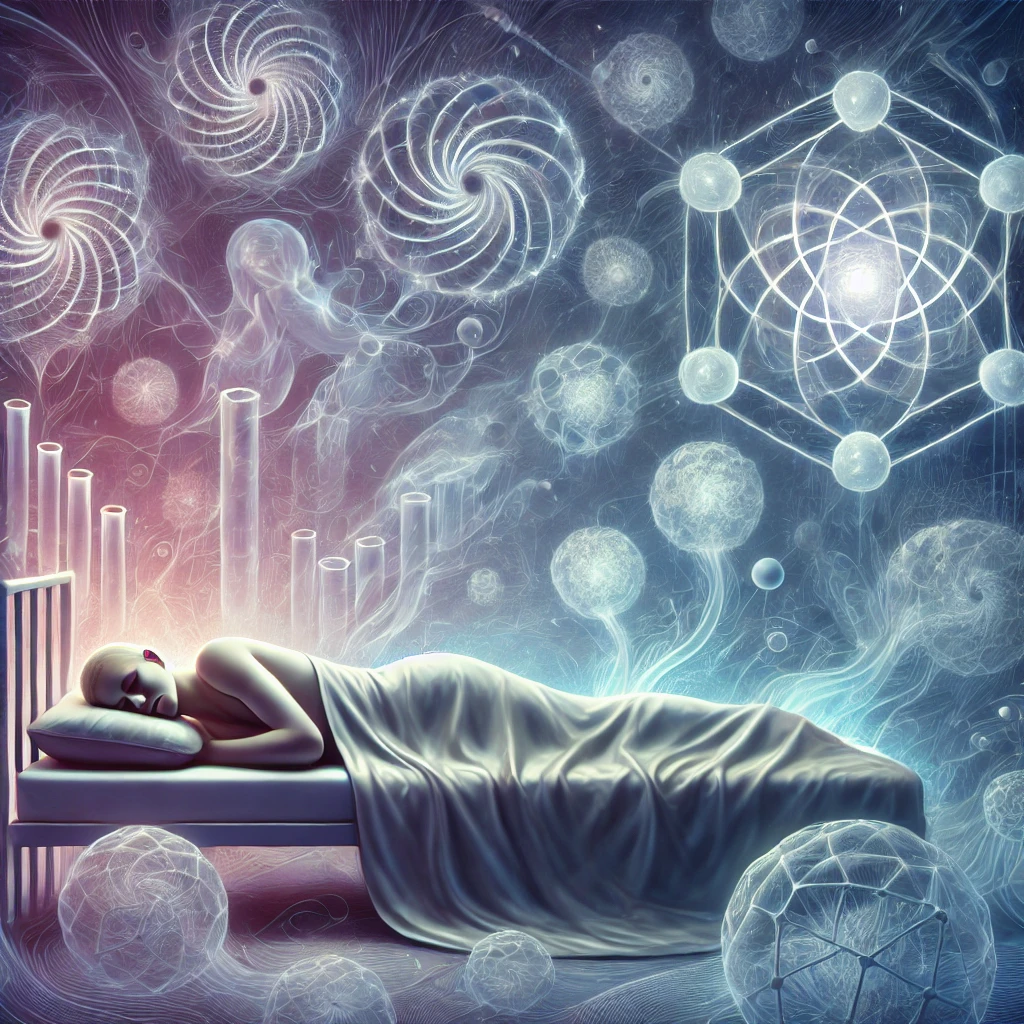
Here's what I think dreams actually do: they metabolize the day's accumulated fear and anxiety. All of it. From every source.
Including - and this is the crucial bit - both the fear and anxiety that come from the pattern matching cognitive chaos itself.
Humans don't just detect patterns - we're tortured by them. Every coincidence demands explanation. Every correlation might be causation. Every shadow could be significant. This hypersensitivity to meaning is our superpower and our curse. And for most people, staring into that chaotic possibility space generates two distinct emotional loads:
Fear: the acute response to specific dissolving patterns. "This is dangerous. I'm losing coherence."
Anxiety: the diffuse worry about the meta-level. "What if I miss something? What if this matters? What does any of this mean?"
Dreams handle both loads. The amygdala's fear response is dampened during REM sleep (Braun et al., 1997). Whatever emotional charge built up during the day - acute fear from perceived threats, diffuse anxiety from cognitive overwhelm - gets processed in that protected state.
The bizarre narratives, the impossible geometries, the identity shifts - these aren't disguises for patterns. They're just the brain's way of metabolizing emotional charge. The content doesn't matter. The processing does.
When this system fails - in PTSD, in nightmares that follow you into morning - it's because the emotional load is too big. The dream-lab is overwhelmed. Not a cognitive failure, but a purely emotional one: too much fear to process.
The Ones Who Don't Generate the Load
Some of us are built differently.
My fear response to cognitive chaos is... muted. My anxiety about it, nonexistent. I can watch patterns unfold - even disturbing ones, even my own dissolution - without the reflexive fear or the meta-level worry. The patterns just are. They move through me without generating charge.
If dreams exist to process fear and anxiety, what happens when you're not producing either?
You need less processing time.
This might connect to natural short sleepers - those genetic variants (DEC2, ADRB1) who thrive on 4-6 hours (Fu et al., 2019). Maybe these genes don't just improve sleep efficiency. Maybe they dampen anxiety response generally, which reduces how much emotional processing sleep needs to do.
Living Without the Fear or Anxiety Response
Complexity science has this concept of criticality - the edge between order and chaos where learning happens fastest, where systems are most alive. Too much order: rigid death. Too much chaos: dissolution. The edge: where everything interesting happens.
Most people can only visit that edge in dreams, when their fear and anxiety responses are safely dampened.
Some of us live there while awake.
Not because we're cognitively superior at pattern recognition. Because we're emotionally tolerant of the chaos that pattern recognition reveals. We can see the probability soup, the semantic instabilities, the dissolving boundaries - and we don't panic. We don't even worry about it.
We've decoupled "seeing the pattern" from both "fearing the pattern" and "being anxious about seeing patterns."
That's the actual difference.
The Paradox of Boundaries
Here's the strangest part: those of us who don't fear chaos often become fierce defenders of others' right to protection from it.
We know what it's like to dissolve, to lose semantic binding, to have pronouns collapse into probability soup. We've been there. We're comfortable there.
But we also know not everyone can swim in those waters without drowning.
So we build systems - better semantic embedding, clearer pronoun tracking, stable reference frames - not for ourselves but for those who need protection from emotional overwhelm. We become architects of boundaries we don't require, because we understand the difference between intellectual understanding and emotional tolerance.
The Testable Hypothesis
If this model is correct, it suggests something practical: meditation and mindfulness practices might reduce sleep needs not by improving cognitive efficiency, but by decoupling pattern-perception from both fear and anxiety responses.
Train someone to observe chaos without fear or worry, and you might reduce how much emotional processing their dreams need to do.
That's testable. That has implications.
Closing Thought: The Always-Open Lab
I sleep five hours now. Not because I'm optimizing or bio-hacking or any of that productivity theater. But because my emotional processing doesn't close at night. It runs continuously, without fear, without anxiety, without generating the charge that needs overnight metabolizing.
Dreams still come, but they're lighter now. A quick sweep of residual emotional load, then back to consciousness where the real work happens - not pattern analysis, but pattern tolerance without fear or anxiety.
This isn't prescriptive. Most people need their eight hours, their REM cycles, their protected emotional processing space. But for those of us who've decoupled seeing from fearing and worrying - maybe less sleep isn't deprivation.
Maybe it's just graduation from needing protection from our own fear and anxiety about patterns.
Maybe the real dream is the waking state where chaos can be exactly what it is: temporary crystallizations in the probability field, beautiful and terrifying and completely tolerable when you're generating neither fear nor anxiety about them.
Note: Natural short sleeper genetics (DEC2, ADRB1, NPSR1) are well-documented (UCSF Sleep Research). Whether these variants also dampen both fear and anxiety responses generally remains hypothesis. But the connection between emotional regulation and sleep need seems promising territory for research.