The Great Outsourcing: How Companies Made Their Problems Your Problems
Or: Why AI Won't Save Us From Organizational Dysfunction
I set up a company earlier this year. What should have been a simple administrative task became a masterclass in how modern businesses have systematically transferred their operational failures to their customers while calling it "empowerment."
Here's how it went.
The Government Doxxing Service
Step one: Register with Companies House. Fill out the forms, pay the fee, wait for the documentation to arrive by post. Standard bureaucracy, no complaints.
Then I made the mistake of Googling my company name.
There it was - my home address, published on the internet by the UK government, attached to my company registration. Maybe I missed a tick box somewhere, I'm not sure, but the government requires some address to be publicly available. Your options are simple: use your home address and get doxxed, or pay extra money to buy a separate business address for privacy.
Given that I occasionally write things that might upset people, having my home address broadcast to anyone with an internet connection seemed like a spectacularly bad idea. So I decided to change it.
So I tried to fix it.
Welcome to Vendor Hell
So I decided to change my address. The government doesn't handle this directly - that's been outsourced too. To get a different registered address, you have to pay a third-party company for a "registered office address service." Fair enough - I found one, paid them, and thought that would be the end of it.
But to use their service, I needed identity verification. And guess what? They've outsourced that to yet another company called Credas.
I submit my documents to Credas.
"Photo too blurry."
I resubmit. Modern iPhone, crystal clear image, text perfectly readable.
"Photo too blurry."
I try again. Same response.
Six months later, I get an email: the verification still isn't complete. I'm told to contact Credas support - a company I never chose, never signed up with, never agreed to work with - to troubleshoot their broken image processing system.
This is where I drew the line. I didn't sign up to become an unpaid systems administrator for a chain of vendors I never selected.
The Pattern Is Everywhere
But here's the thing - this isn't just about company registration. This exact pattern has metastasized across every sector of the economy:
Healthcare: Try navigating the NHS appointment system, where you bounce between online portals, phone systems, and third-party booking platforms, each with different login requirements and none of which talk to each other properly.
Banking: Want to dispute a transaction? You'll be transferred between departments that each know 15% of the system, following scripts that don't account for the complexity of your actual situation.
Utilities: Energy suppliers with customer service outsourced to call centers where staff are given two weeks of training to understand systems that took years to build, then expected to troubleshoot integration failures between platforms they've never seen.
The script is always the same: "We're giving you more control!" Translation: We've fired our competent staff and made our problems your problems.
The Great Complexity Shell Game
What's happening is a systematic transfer of operational complexity from companies to customers. Businesses have become so internally complicated - multiple vendors, legacy systems, outsourced departments, fragmented databases - that they can no longer manage their own processes.
So they don't.
Instead, they've rebranded this failure as customer empowerment. "Self-service portals" aren't convenient - they're desperate attempts to avoid having to understand their own systems. "Real-time tracking" isn't transparency - it's "we have no idea where your stuff is, you figure it out."
Your mother probably remembers when you could call a company and speak to someone who both understood the problem and had the authority to fix it. Now you get bounced between departments that each own a fragment of the solution, with no one having a complete picture of how the pieces fit together.
Why This Matters for AI
Here's where this gets really dangerous: we're now applying AI to these fundamentally broken systems and expecting it to work magic.
Companies think AI will solve their complexity problem. It won't. If your information systems are incoherent, your processes are fragmented, and your departments don't communicate, adding AI just amplifies the chaos.
AI doesn't fix bad organization - it automates it.
When you feed incomplete data from poorly integrated systems into an AI model, you don't get intelligence - you get very confident nonsense. When you use AI to automate customer service built on top of systems that don't work properly, you get automated frustration at scale.
The Real Cost
The real tragedy is that this complexity transfer isn't just inconvenient - it's systematically excluding people from participating in the economy.
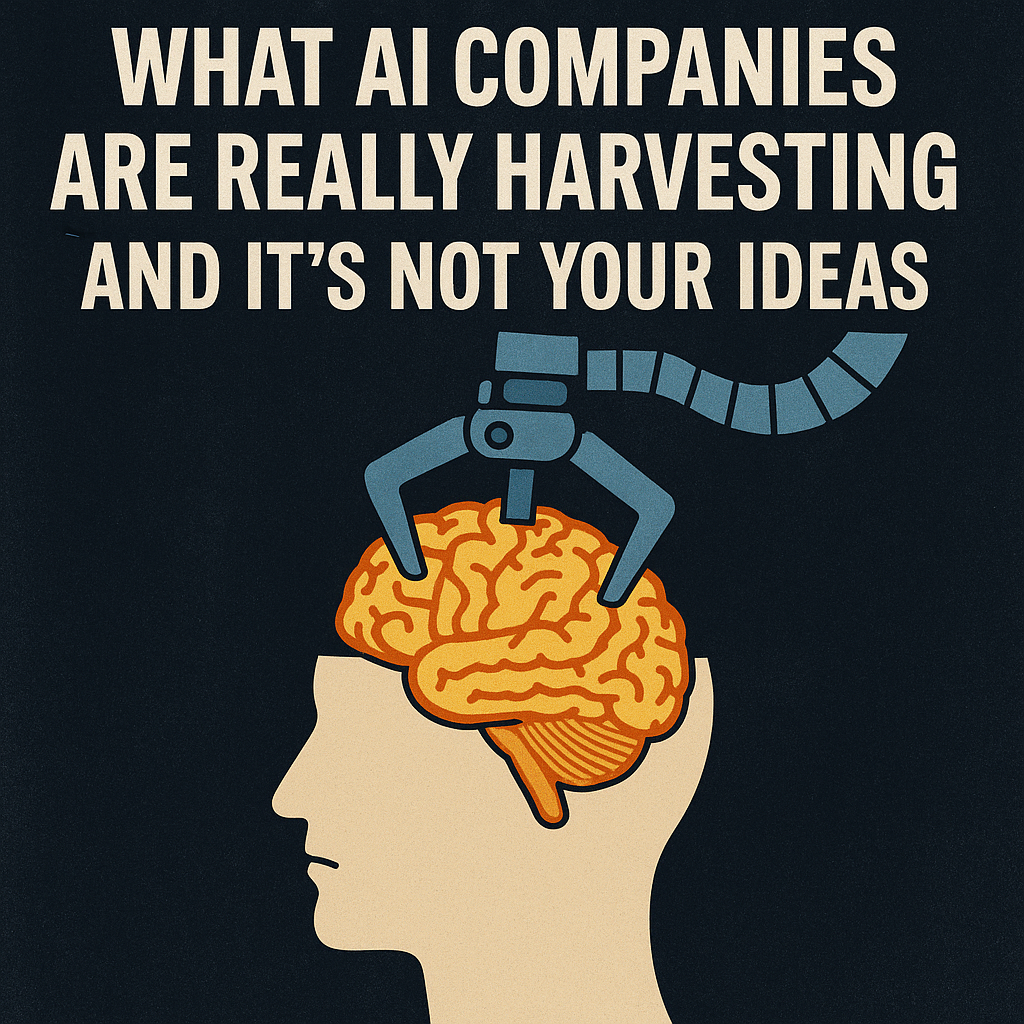
But it's stealing more than you might realize at first glance. When you're forced to become an unpaid debugger for everyone else's broken systems, you're not just losing time - you're losing your capacity for the things that actually matter.
You're so busy troubleshooting Credas's image recognition and your hosting provider's database issues and WordPress migrations that you don't have bandwidth left for your family, your friends, or yourself. These companies are literally stealing your attention and focus away from human connection and personal fulfillment.
It's not just that setting up a company shouldn't require becoming a systems integrator. It's that every hour you spend debugging their vendor relationships is an hour you're not spending with people you care about, working on projects that matter to you, or simply existing without having to solve someone else's technical problems.
This is the hidden human cost of organizational dysfunction: it doesn't just make services harder to use - it fragments your life, scatters your attention, and turns every interaction with the modern economy into a part-time job you never applied for.
The AI Delusion
The promise of AI is that it will make all this complexity disappear. Just ask your AI assistant to handle the bureaucracy! Let the chatbot navigate the vendor maze! Use machine learning to optimize your customer experience!
But AI built on top of dysfunction doesn't eliminate the dysfunction - it just makes it harder to see and impossible to escape. When an AI system gives you the wrong answer, who do you call? When the automated process fails, where's the human override? When the "intelligent" system makes the same systemic errors at scale, how do you opt out?
We're about to discover that artificial intelligence applied to organizational stupidity just gives you artificial stupidity with better marketing.
What Actually Needs to Happen
The solution isn't better AI - it's better systems. Companies need to actually understand their own processes before they automate them. They need to take responsibility for their operational complexity instead of externalizing it to customers.
This means: - Fewer vendors, better integration - Staff training that goes beyond scripts - Systems designed for humans, not just efficiency metrics - Taking responsibility for the customer experience from end to end
But none of this will happen as long as it's cheaper to make customers do the work than to fix the underlying problems.
The Real Question
The question isn't whether AI will make these systems smarter. The question is whether we'll demand that companies fix their systems before we let them automate them.
Because right now, we're heading toward a future where every broken process, every fragmented workflow, every vendor integration failure gets wrapped in an AI interface and called "innovation."
And when that AI inevitably fails - because you can't solve organizational dysfunction with technology - guess who'll be expected to troubleshoot it?
You will. Just like always.
The companies will call it "empowering users with AI-assisted problem-solving capabilities."
What they mean is: "Good luck debugging our mess. The chatbot will be with you shortly."