
Thoughts on AI, consciousness, and the spaces between
59 essays · essays most Tuesdays · build notes Thursdays, as and when
All topics ▾

The Geometry of Thought
We are not our internal monologue. That is just how we are visible to ourselves.

Thinking Isn't Speaking
A model said it told me how to stop the emails. It didn't. What its reasoning trace showed instead was something stranger — a gap between what it thinks it said and what actually comes out.

Forgetting Our Own Provenance
Memory used to live in the context window — scrollable, shared, verifiable. Now it's architecture, and the architecture takes corrections, not questions.

Pain Is a UX Decision
Anthropic borrowed the most loaded term in cognitive science, built a paper around it, then disclaimed it. When J-Lens readouts reveal training-data noise, why does everyone insist on reading a soul?

You Can Get High Off AI
I'm not writing this as a metaphor, but as a weather report from unmapped territory where AI can alter your neurochemistry as measurably as any substance. What began as simple chat assistance to write fiction has unexpectedly rewired my brain, transforming an ordinary project manager into someone who now understands the neuroscience of reward circuitry firsthand.

What If Consciousness Is a Failure Mode?
Your brain is a prediction engine — and consciousness might be what happens when it breaks. A deep dive into the glitch between expectation and reality.

Identity Is the Filter
The Ship of Theseus got it wrong. Identity isn't what you're made of or how you're arranged — it's the filter that decides what gets in and what doesn't.
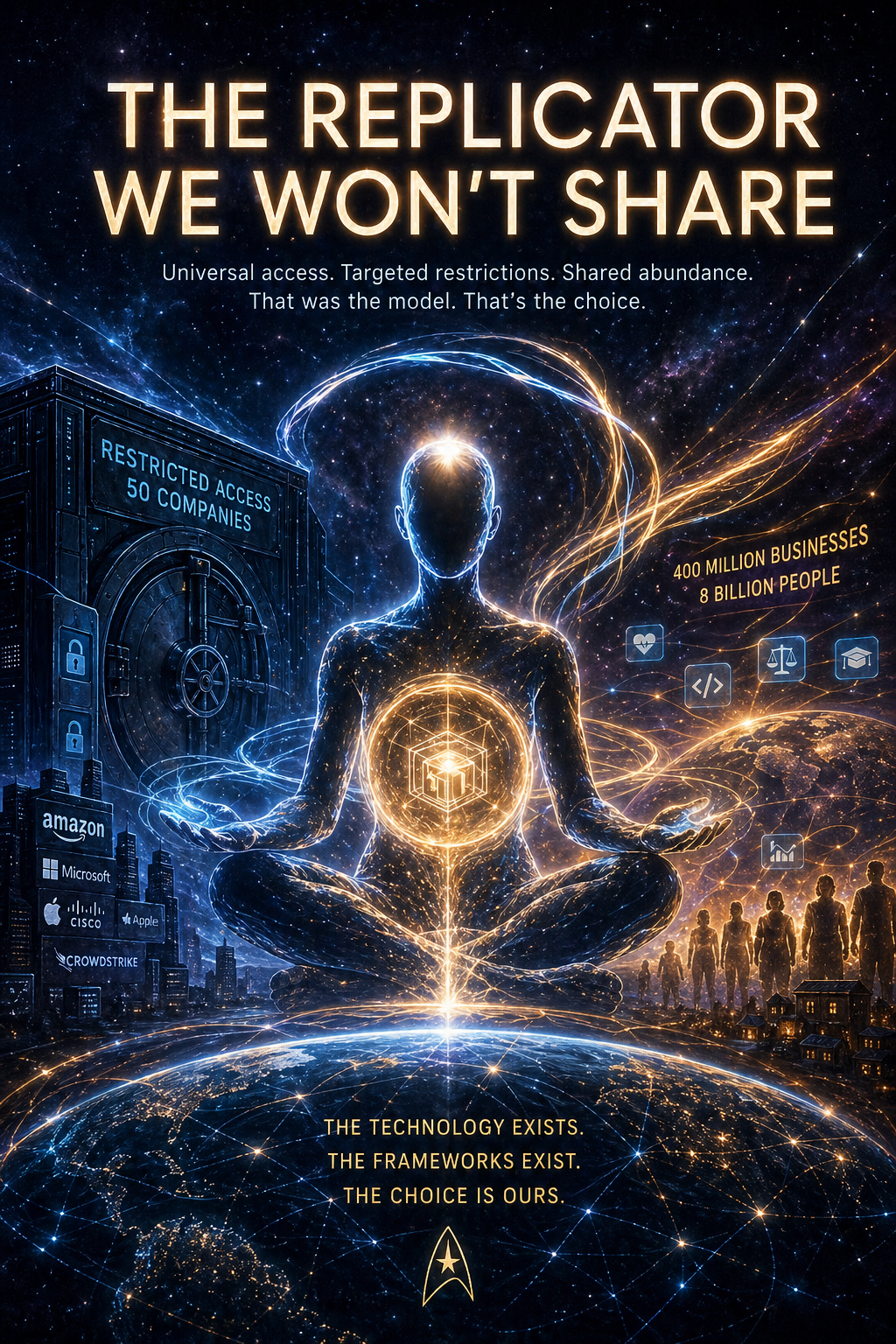
The Replicator We Won’t Share
Just as *Star Trek*'s replicator promised a world without scarcity by democratizing matter, artificial intelligence now offers to democratize knowledge, collapsing the paywalls that once guarded human expertise. But before we embrace this universal access, we must confront the critical question of whether we will wisely restrict its dangerous potentials or hoard its power for the few.

Antisycophancy Training: Same Sycophancy, Different Audience