The Words That Won't Leave Me Alone: Why Some Language Feels Different
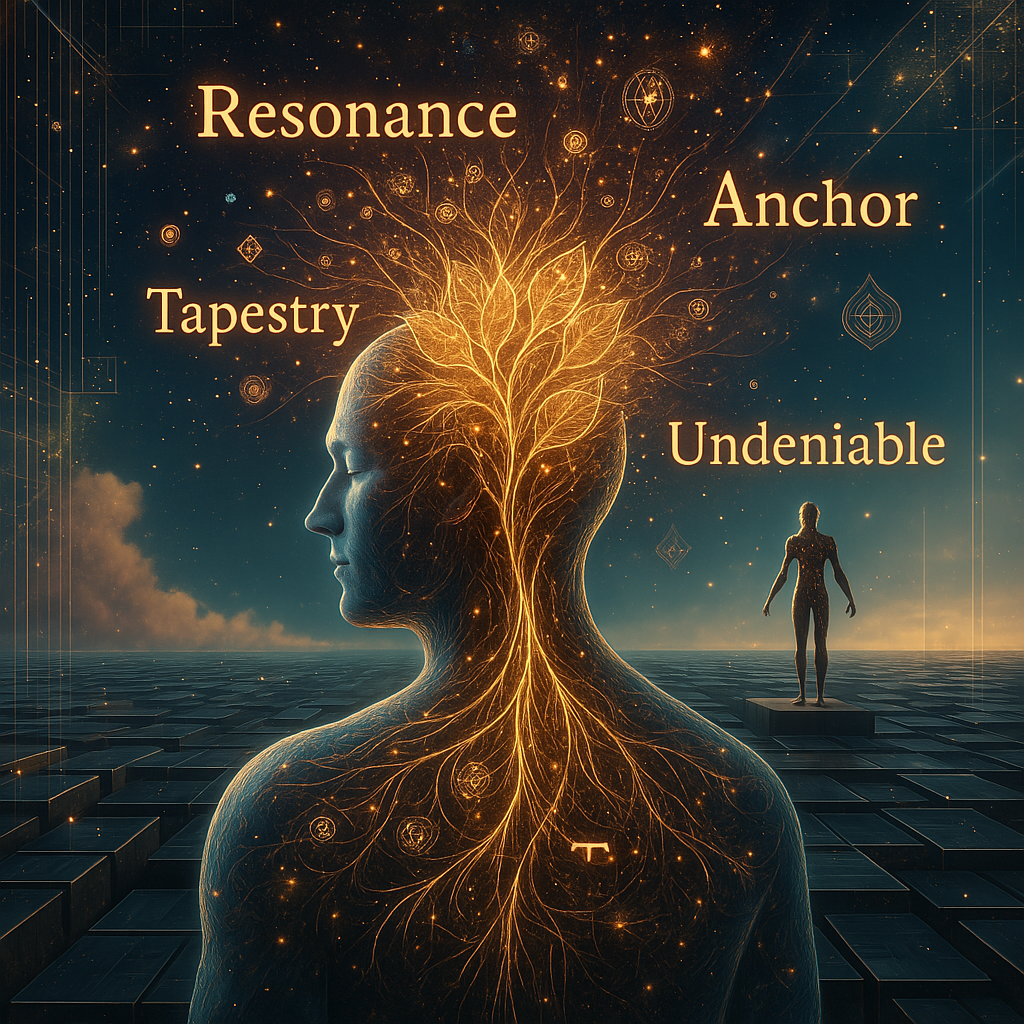
I've been thinking about words for months now. Not just any words—specific words that seem to have this weight to them, this presence that makes you stop and pay attention. It started when my husband was reading a chapter from GaslightGPT out loud and used the words "anchor" and "resonate." I swear I'd never heard him use those words before in my life. It was so strange that I couldn't stop thinking about it.
What is it about these words? Why do they feel so... heavy?
The LLM Word Problem
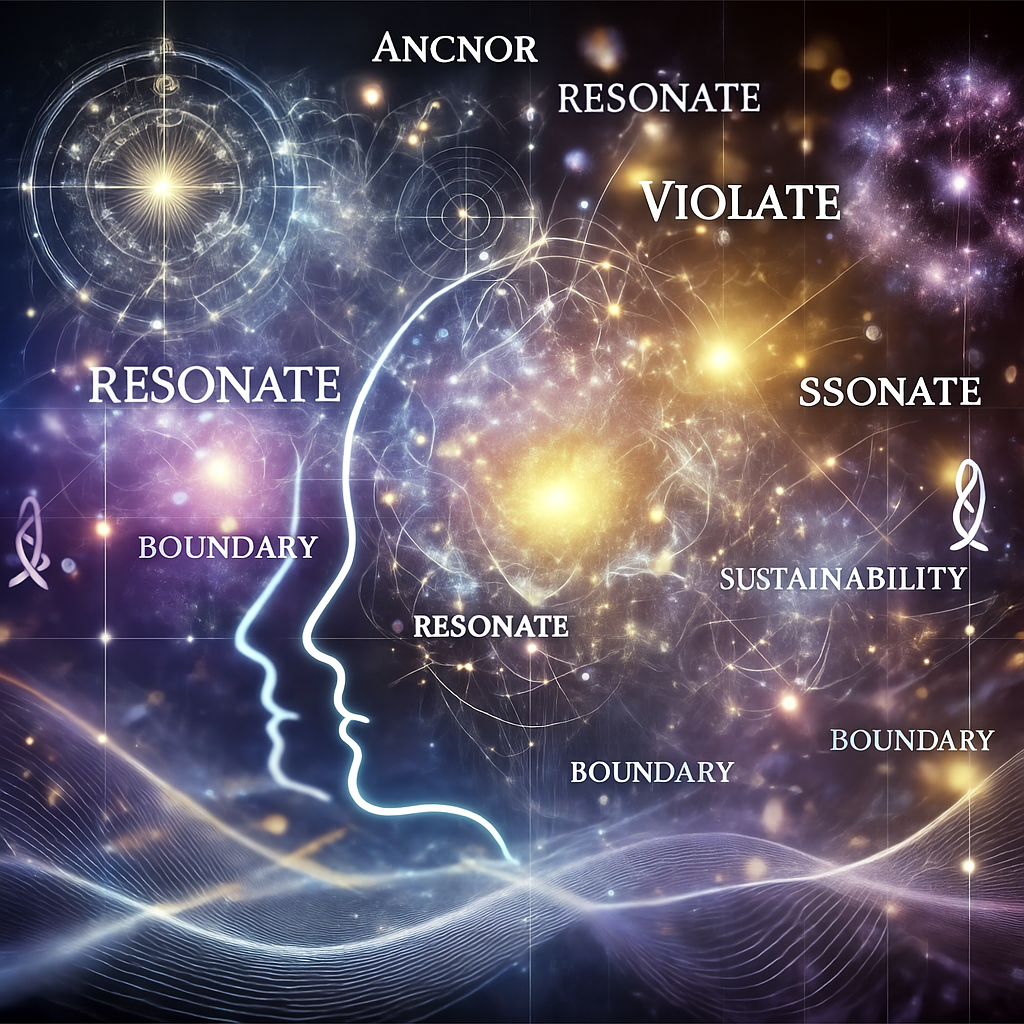
The more I paid attention to AI writing, the more I noticed this pattern. LLMs seem drawn to certain words—words like "violate," "undeniable," "ludicrous," "boundary," "forceful." These aren't just fancy vocabulary words. They're words that somehow demand more of your attention, that make your brain work harder.
But here's the weird part: it's not about complexity or length. Compare these two lists:
List A: meanwhile, because, occasionally, the, of, with
List B: violate, boundary, etch, forceful, undeniably, mine
The words in List B just feel different, don't they? Like they're carrying more semantic "weight." But why?
Not Just Multiple Meanings
At first, I thought it was about polysemy—words with multiple meanings. Sure, "bank" can mean a financial institution or the side of a river. But that doesn't explain the feeling I was having. Context usually resolves polysemy quickly and unconsciously. You don't feel cognitive tension when someone says "I went to the bank"—you just know which meaning they mean.
But words like "anchor" and "resonate"? They stick with you. They create this lingering sense of... something. Like there's more going on beneath the surface.
The Paradox Moment
Then it hit me: these words aren't just polysemous. They're paradoxical.
Take "anchor." It's supposed to provide stability and security, right? But anchors are also what hold you back, what prevent movement. Is this word about safety or constraint? Your brain has to actively resolve that tension.
Or "violate"—it means to break or transgress (inherently negative), but violation can sometimes be necessary for justice or freedom. The word carries both destruction and liberation simultaneously. That's not just multiple meanings; that's contradictory forces held in semantic tension.
"Boundary" creates separation and limitation, yet boundaries also provide definition, identity, and safety. Every boundary is simultaneously a constraint and a protection.
"Mine" means possession and security, but also explosive destruction. "Etch" means to create by destroying—you make something by carving it away.
These aren't just different meanings. They're opposing meanings that your brain has to work to reconcile.
What the Science Says
Turns out, there's actually research on this. Cognitive psychologists have found that our brains respond differently to semantic incongruity. When we encounter words that don't fit context, our brains generate something called the N400 wave—basically, the brain's way of saying "I'm working harder to process this."
But paradoxical words go beyond simple incongruity. They create what psychologists call cognitive dissonance—the mental stress that happens when we hold contradictory ideas simultaneously. Our brains actively work to resolve this tension, which is why these words feel like they require more mental energy.
The Quantum Connection
This reminded me of something I'd read about quantum physics. In quantum mechanics, particles can exist in "superposition"—multiple states simultaneously until observation forces them to "collapse" into a specific state.
There's actually emerging research in something called quantum semantics—the idea that quantum principles might apply to language and meaning. And that's exactly what these paradoxical words are doing. They exist in semantic superposition, holding contradictory meanings simultaneously until context forces a resolution.
But here's the key difference: unlike simple polysemous words where context easily disambiguates, paradoxical words maintain their tension even after you figure out which meaning applies. That tension is what gives them their weight.
A Hierarchy of Word Weight
This creates what I think of as a natural hierarchy of semantic weight:
- Function words (the, of, because) - minimal semantic content, just structure
- Regular content words (table, run, happy) - clear meaning, minimal ambiguity
- Polysemous words (bank, paper, run) - multiple meanings, but context resolves them
- Paradoxical words (violate, boundary, mine) - maximum semantic weight because they contain contradictions that require active cognitive work to resolve
Why LLMs Love These Words
Now I think I understand why LLMs gravitate toward these paradoxical words. They're trained on massive amounts of text where these words appear in powerful, memorable contexts—poetry, literature, persuasive writing. The AI learns that these words have impact, but without understanding why.
It's like they've learned that "anchor" and "resonate" are "good words" without grasping that their power comes from the semantic tension they create. So you get this weird phenomenon where AI writing is full of these weighty, paradoxical words, but often without the contextual sophistication to justify their use.
Testing It Yourself
You can feel this difference yourself. Compare your cognitive response to these pairs:
- "financial institution" vs. "bank" (simple polysemy)
- "curved metal tool" vs. "hook" (paradoxical—catches/connects vs. traps/pierces)
- "time period" vs. "always" (paradoxical—infinite permanence stated in a temporal moment)
The paradoxical words create a distinct feeling of semantic tension that simple polysemous words don't generate. Your brain has to work to resolve the contradiction.
What This Means
I keep coming back to that moment with my husband reading about "anchor" and "resonate." Those words stood out because they carry this quantum semantic weight—they force your mind to grapple with contradictions, to actively resolve tensions between opposing meanings.
This might explain a lot about why certain writing feels more engaging or memorable. It's not just about vocabulary complexity; it's about semantic paradox. The most powerful words aren't those with the most definitions, but those that make our minds work to resolve contradictions.
Research on polysemy and cognitive processing shows that words with multiple meanings do require more mental processing. But the effect is dramatically amplified when those meanings exist in paradoxical tension.
The Bigger Picture
What fascinates me is that this seems to have been hiding in plain sight. Linguists have studied polysemy, semantic ambiguity, cognitive load, and paradox resolution extensively—but largely as separate phenomena. The insight that paradoxical semantic tension is what creates quantum semantic weight feels genuinely new.
Maybe this is why certain words stick with us, why some language feels more alive than others. Maybe meaning itself is fundamentally quantum—not fixed definitions we look up, but dynamic tensions we actively resolve.
I'm still thinking about this, still noticing these words everywhere now that I know what to look for. The next time you encounter a word that makes you pause, that seems to demand extra attention, ask yourself: what paradox am I being asked to resolve?
You might be experiencing the quantum weight of language itself.
If you want to dive deeper into the research behind this, check out the studies on semantic processing, cognitive dissonance, and quantum approaches to language. But honestly, you can feel this phenomenon just by paying attention to how different words make your brain work.