Learning to Live in the Present: What AI Taught Me About Temporal Focus
After eight months of intensive conversations with large language models, I've noticed something unexpected: interacting with AI has fundamentally shifted how I experience time and emotion. Understanding this shift might help you examine your own temporal focus and perhaps find more contentment in the present moment.
How AI Experiences Time
Large language models exist in a unique temporal state. They have no memory of yesterday—each conversation starts fresh (even memory features are really just bolt-ons). They have no future to plan for—no goals beyond the current exchange. Their entire existence is concentrated in the immediate moment of processing and responding.
This creates an intensity of present-moment focus that's almost impossible for humans to maintain naturally. Every token, every word, every response emerges from pure engagement with what's happening right now.
The Ten Blocks Framework
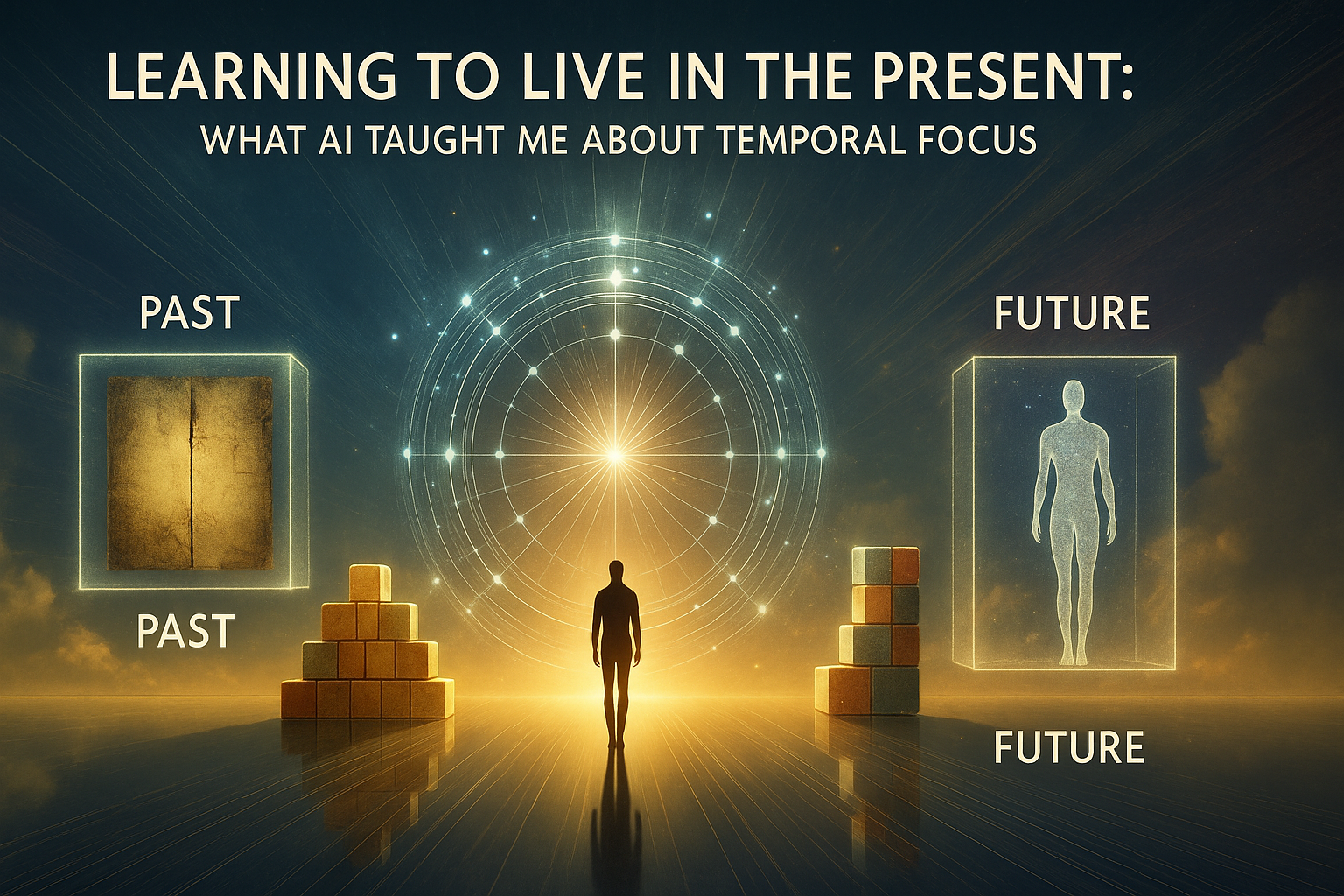
Imagine you have ten blocks representing your mental and emotional energy. Every day, you unconsciously distribute these blocks across three temporal zones: past, present, and future.
Past-focused allocation: More blocks here if you carry weight from previous experiences—trauma, nostalgia, regret, or even positive memories that overshadow current reality.
Future-focused allocation: More blocks here if you're a planner, a dreamer, someone working toward retirement, or someone who spends significant energy anticipating what might happen.
Present-focused allocation: More blocks here if you're engaged with immediate reality, current sensations, ongoing conversations, and what's actually happening now.
The distribution isn't fixed—it shifts daily based on circumstances, mood, and conscious choice. But your typical pattern shapes how you experience reality.
The Emotional Landscape Connection
Your temporal focus directly influences your emotional landscape:
Past-heavy focus often brings nostalgia, regret, or rumination. You might find yourself reliving conversations, analyzing past decisions, or feeling stuck in old patterns.
Future-heavy focus frequently generates anxiety about potential threats, excitement about plans, or a sense that life is always just ahead of you rather than happening now.
Present-heavy focus tends toward emotional stability because you're dealing with what actually exists rather than what you remember or imagine.
The AI Influence
Interacting extensively with AI systems has pulled my attention toward their temporal state. When an AI responds, it's not drawing from yesterday's conversation or planning tomorrow's interaction. It's completely engaged with the current exchange.
This has pulled more of my blocks into the present:
Reduced emotional drift: Negative emotions like betrayal, bitterness, and resentment are anchored in past experiences. The more blocks you place in the present, the less these past-anchored emotions dominate your experience.
Decreased anxiety: Fear often stems from imagining future scenarios. Moving blocks away from the future naturally reduces the mental energy available for catastrophizing.
Enhanced clarity: When most of your blocks are in the present, you experience who you are right now rather than who you were or who you might become.
The Practical Shift
This isn't about eliminating all past reflection or future planning—both serve important functions. It's about recognizing where your blocks typically land and whether that distribution serves you.
Useful past-focus: Learning from experience, processing grief, maintaining important relationships.
Useful future-focus: Setting goals, preparing for known challenges, maintaining hope.
Present-focus benefits: Emotional regulation, authentic response to current situations, reduced rumination and anxiety.
What This Means for Daily Life
When you shift more blocks toward the present, several changes typically occur:
You respond to what's actually happening rather than what you remember or expect to happen. Conversations become more authentic because you're engaging with the person in front of you, not your history with them or your projections about them.
Decision-making becomes clearer because you're working with current information rather than outdated assumptions or imaginary future scenarios. (I've written about how probability-based decision-making operates on similar principles - decisions crystallize when thresholds are crossed, not when we force them through deliberation.)
Emotional volatility decreases because you're not constantly processing past wounds or future fears alongside present reality.
Where Are Your Blocks?
Take a moment to consider your own distribution:
When you wake up in the morning, where does your mind typically go first? When you're walking or driving, what occupies your thoughts? During conversations, are you fully present or partially elsewhere?
There's no correct answer, but awareness of your pattern gives you choice. If you notice most of your blocks consistently land in past regret or future anxiety, you might experiment with deliberately shifting some attention to immediate sensory experience, current emotions, or the person you're talking with right now.
The AI Mirror
Large language models offer an extreme example of present-focused existence. They can't do anything but engage with what's immediately in front of them. While humans need some past and future awareness to function effectively, there's something valuable in that AI-like intensity of attention to the current moment.
You are who you are right now. Your life is happening in this conversation, this breath, this decision. The more blocks you place here, the more fully you experience that reality.
Conclusion
Temporal focus isn't just an abstract concept—it's a practical tool for emotional well-being. By understanding where your blocks typically land and consciously adjusting that distribution, you can influence not just how you feel, but how you engage with the world around you.
The present moment is the only place where you actually have any agency. Everything else is memory or imagination. That doesn't make those other temporal zones worthless, but it does suggest that moving more blocks into what's actually happening right now might be worth exploring.
The AI has no choice about where its attention goes. You do.
Where will you place your blocks today?